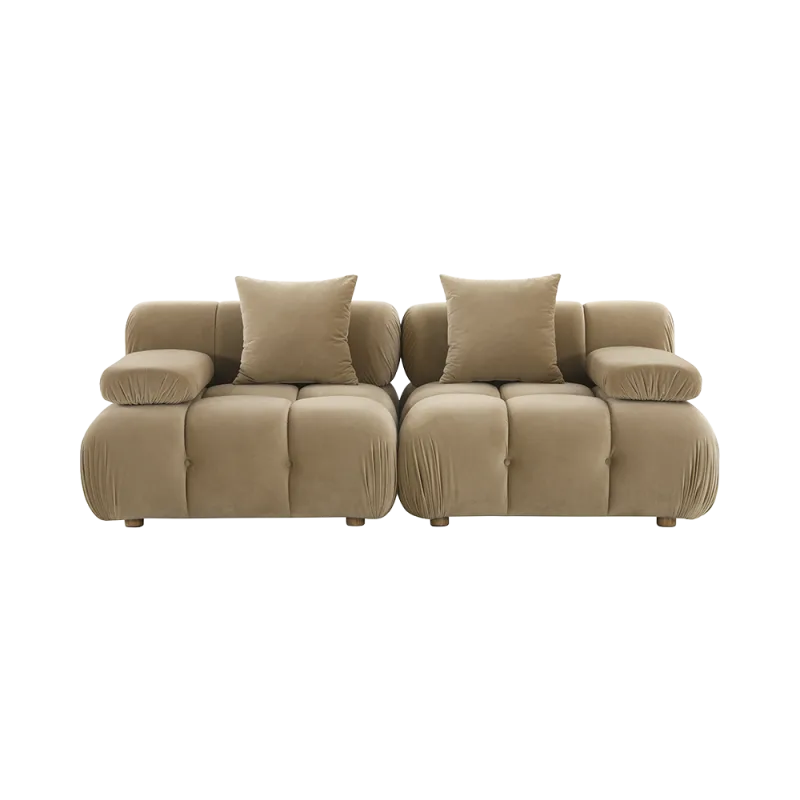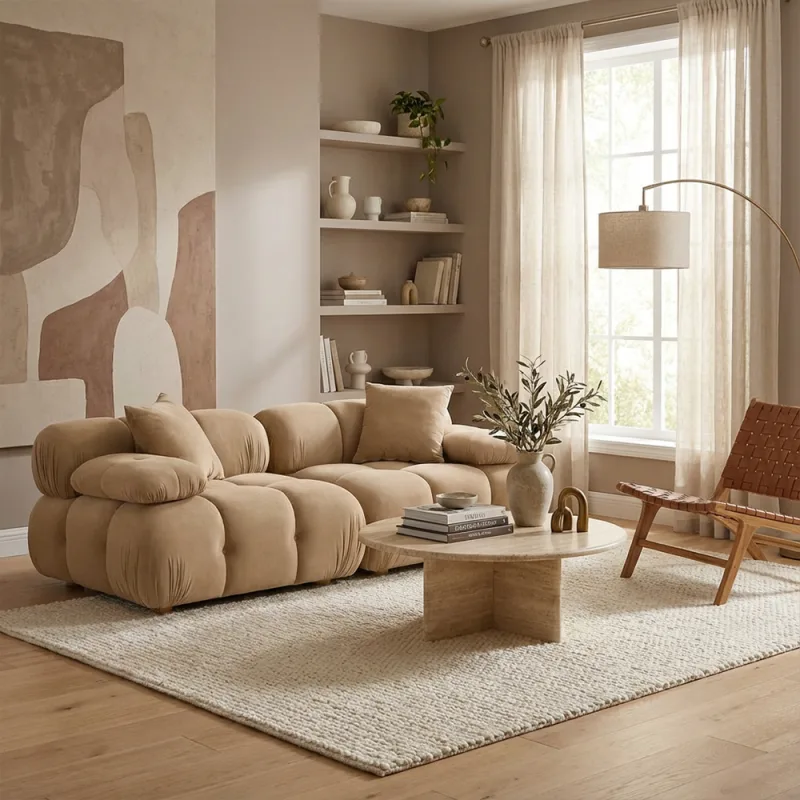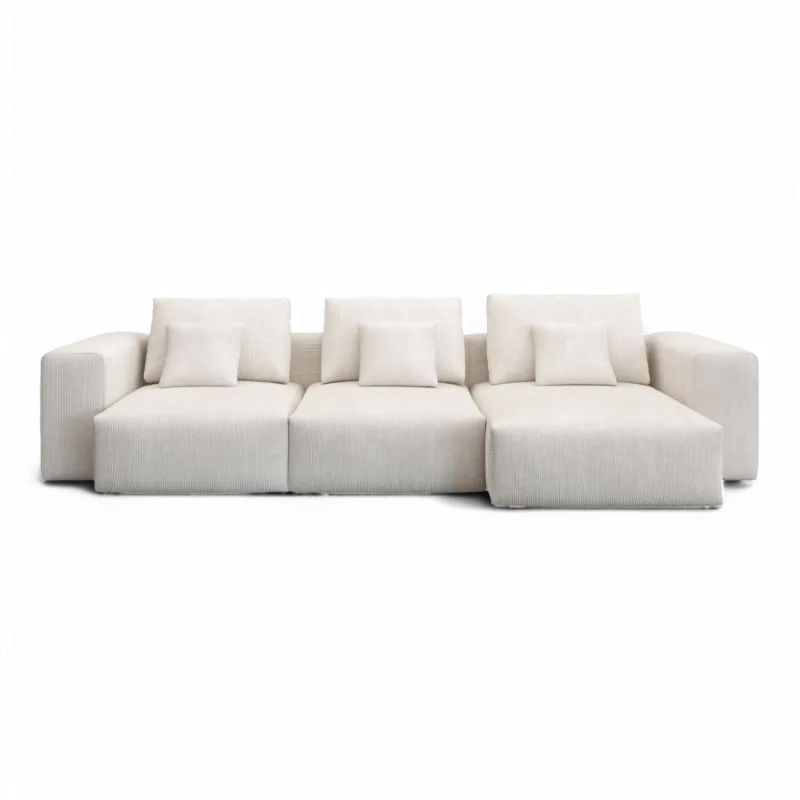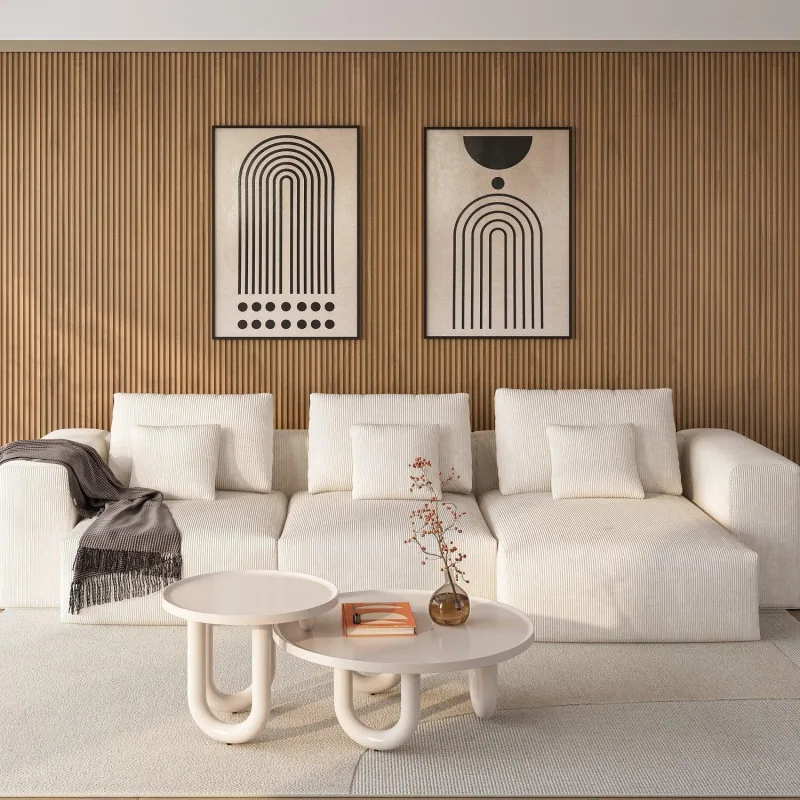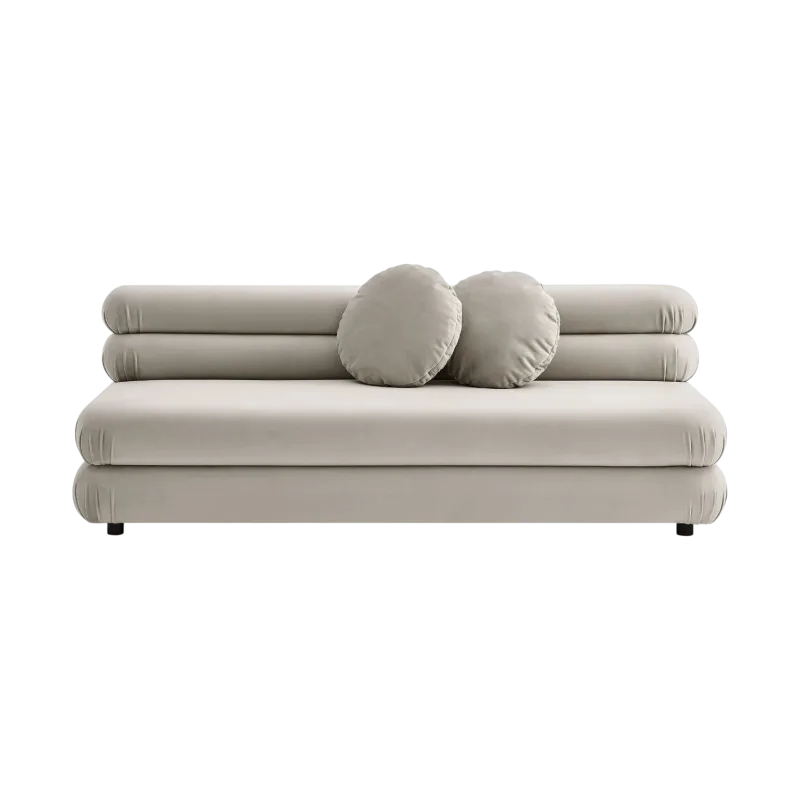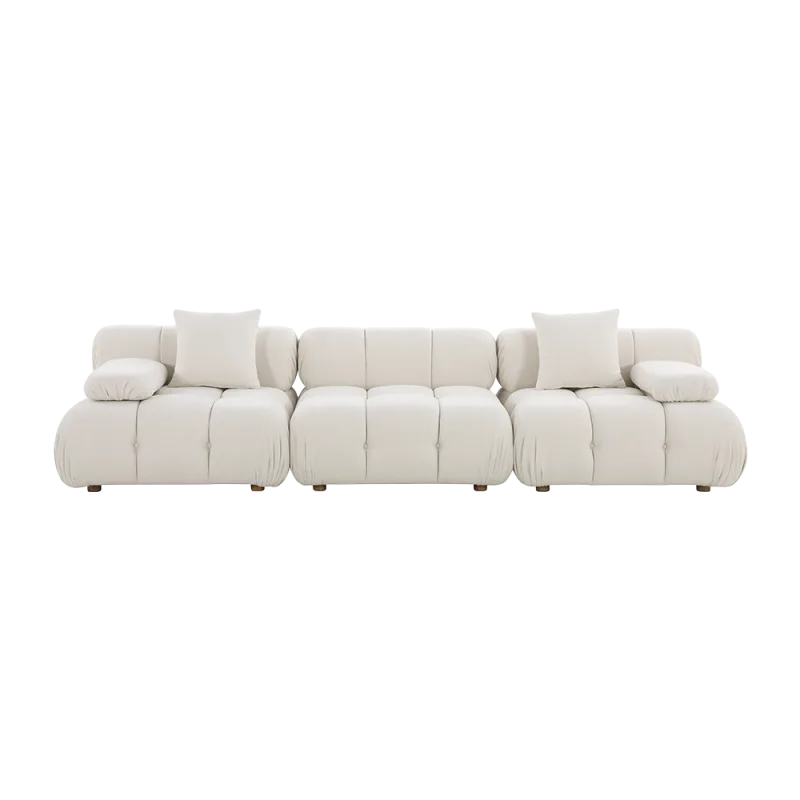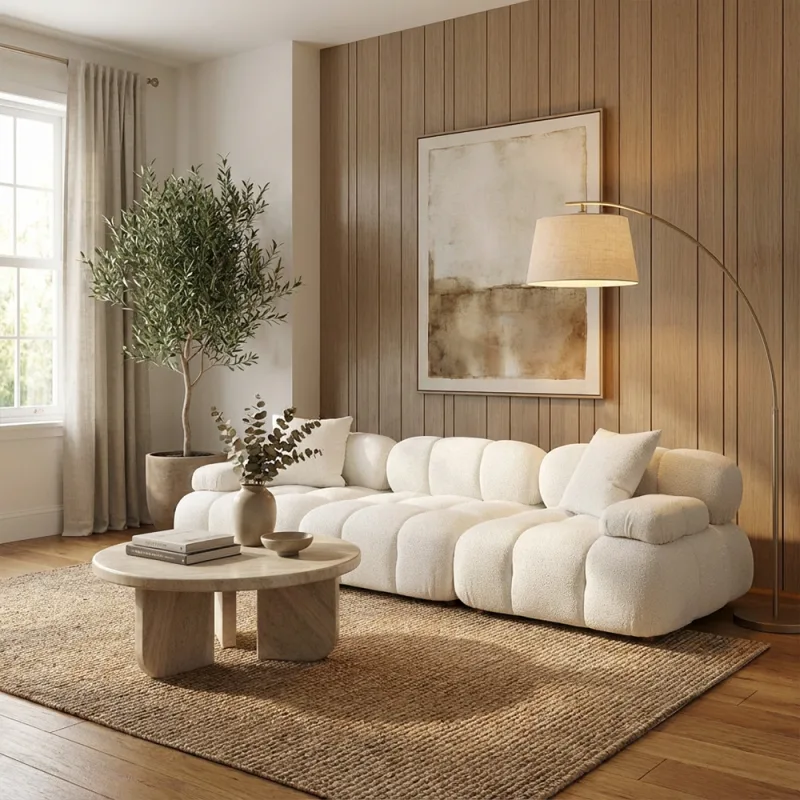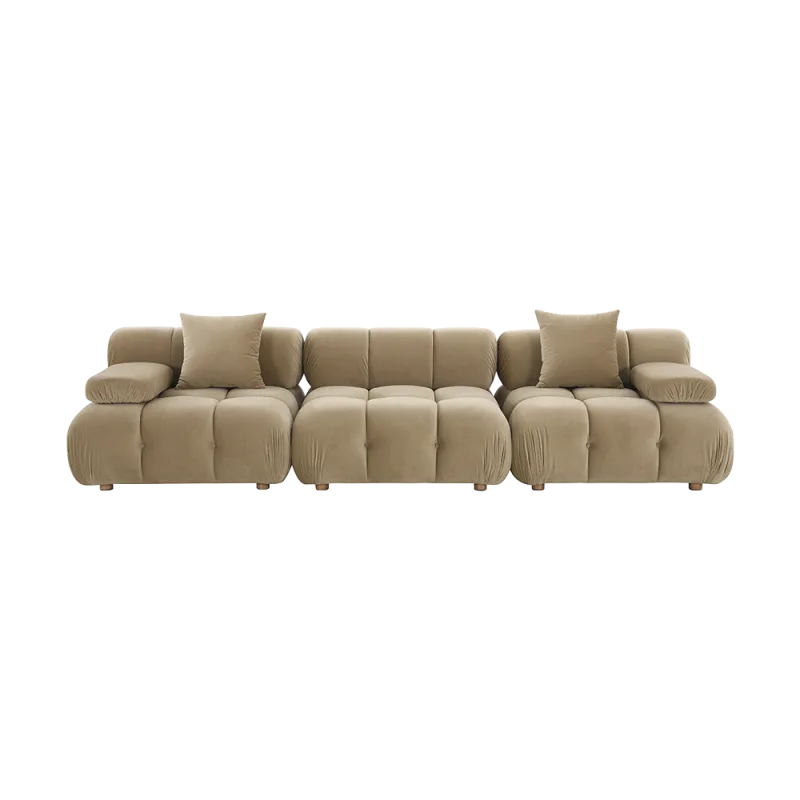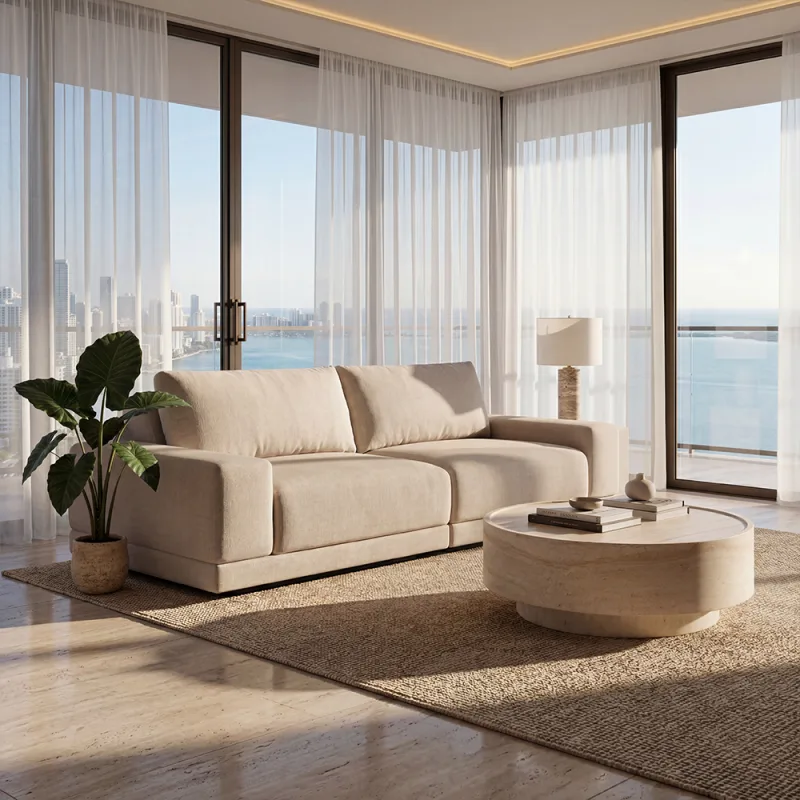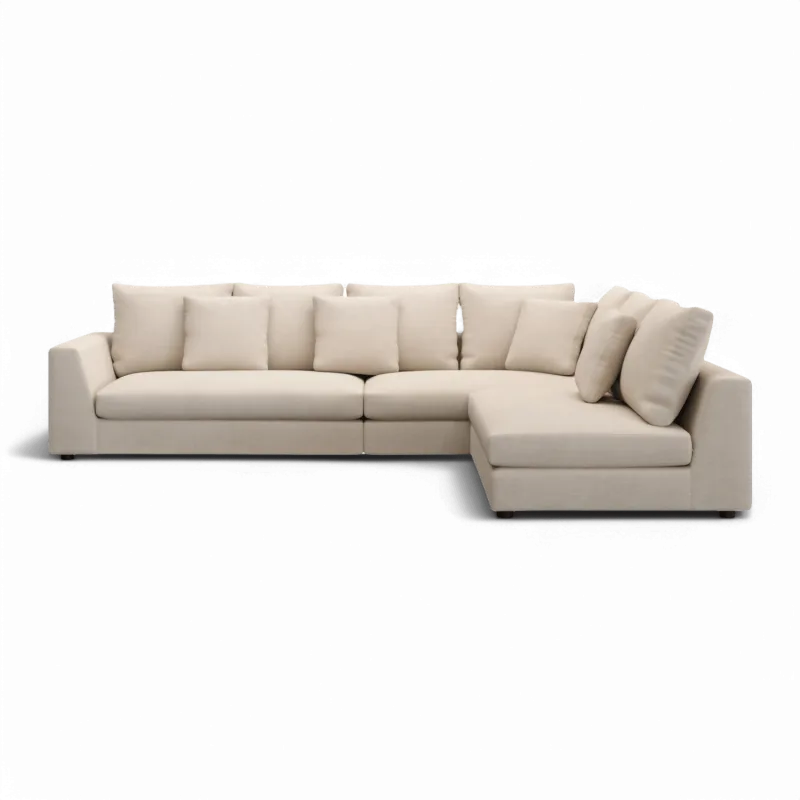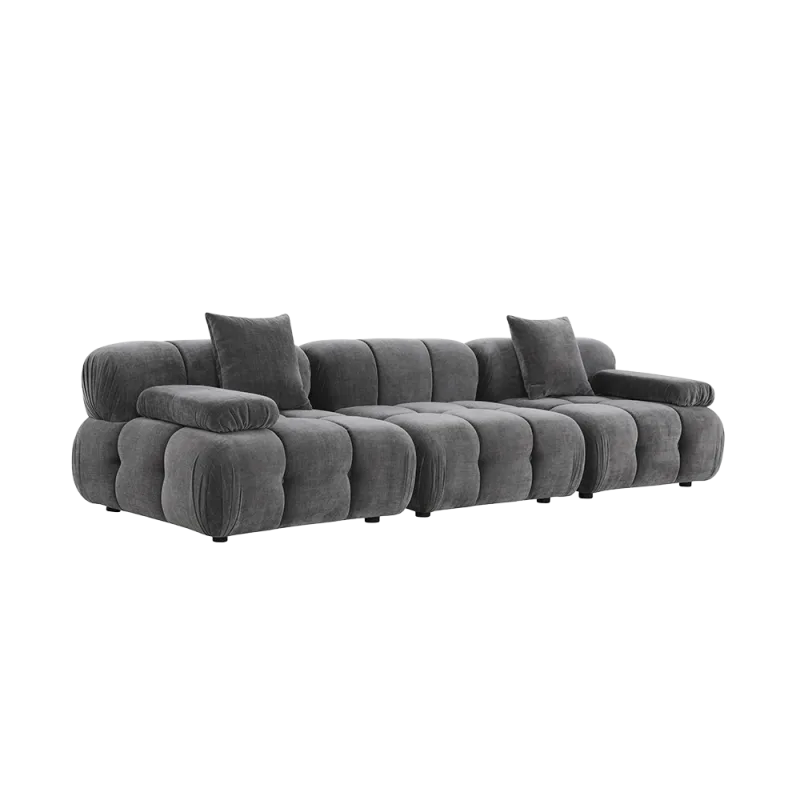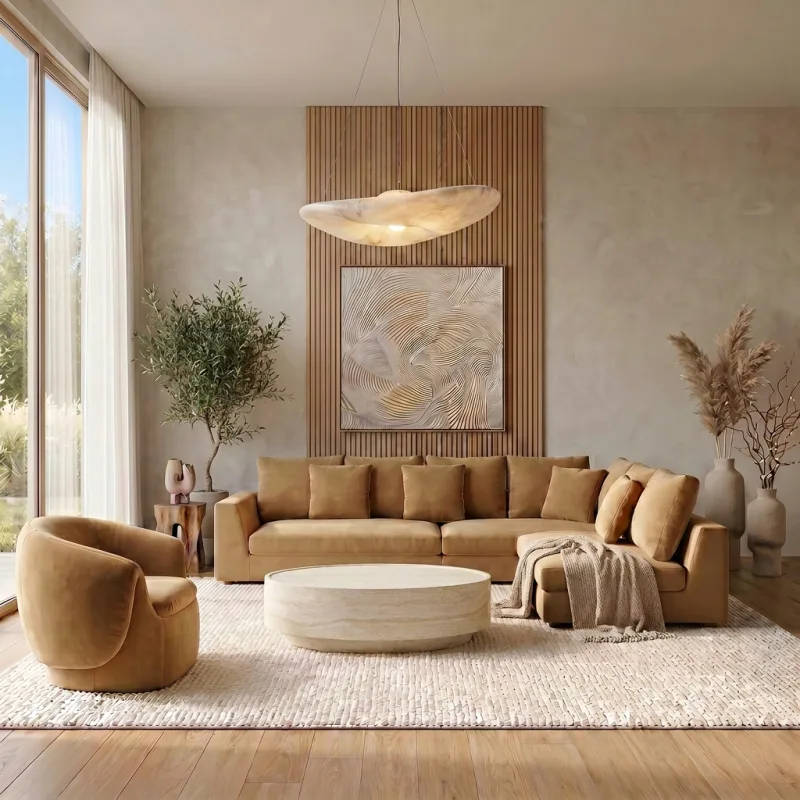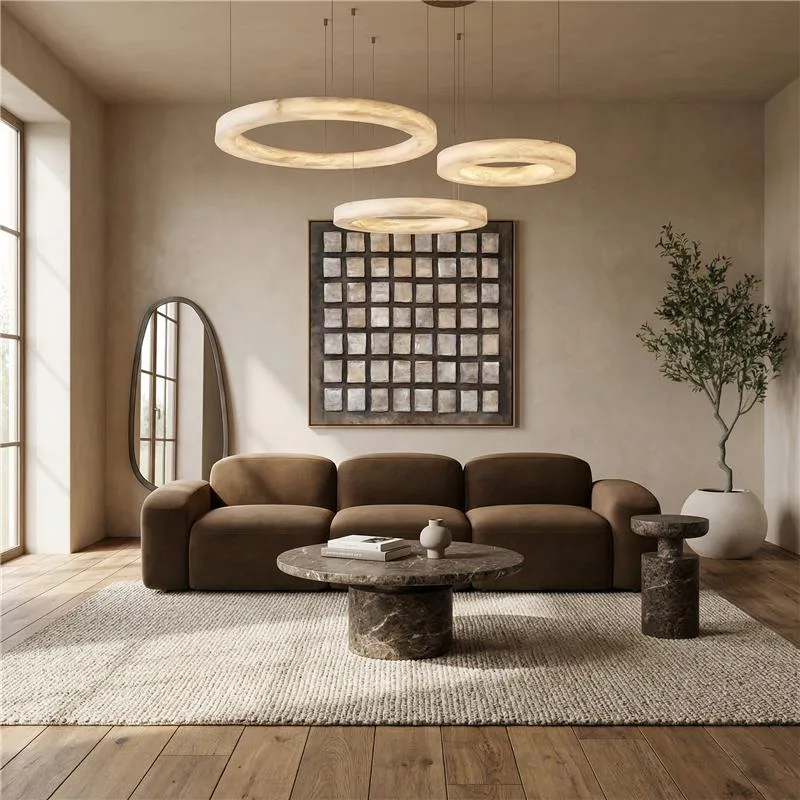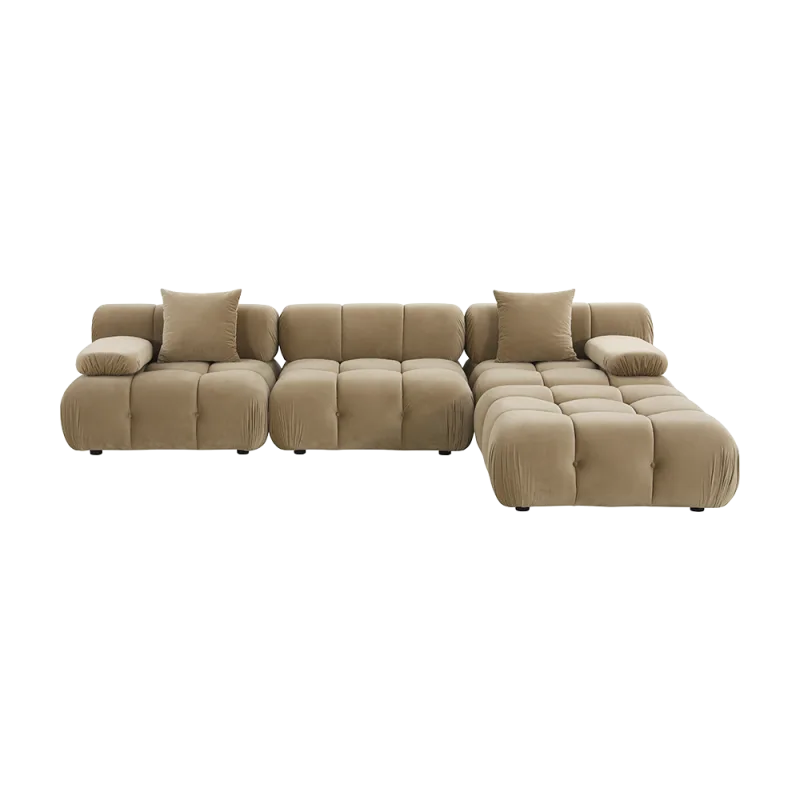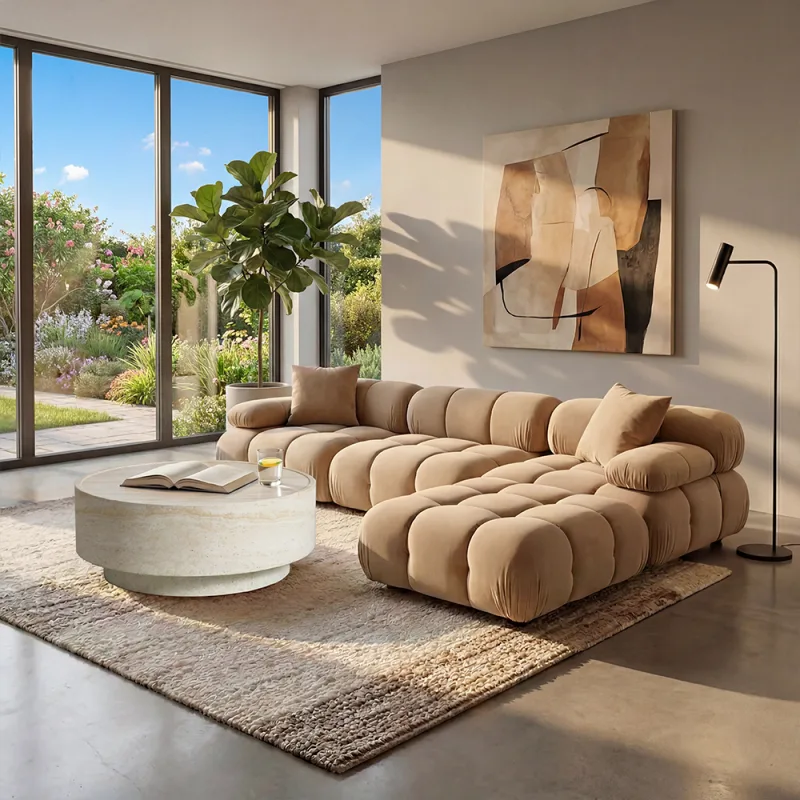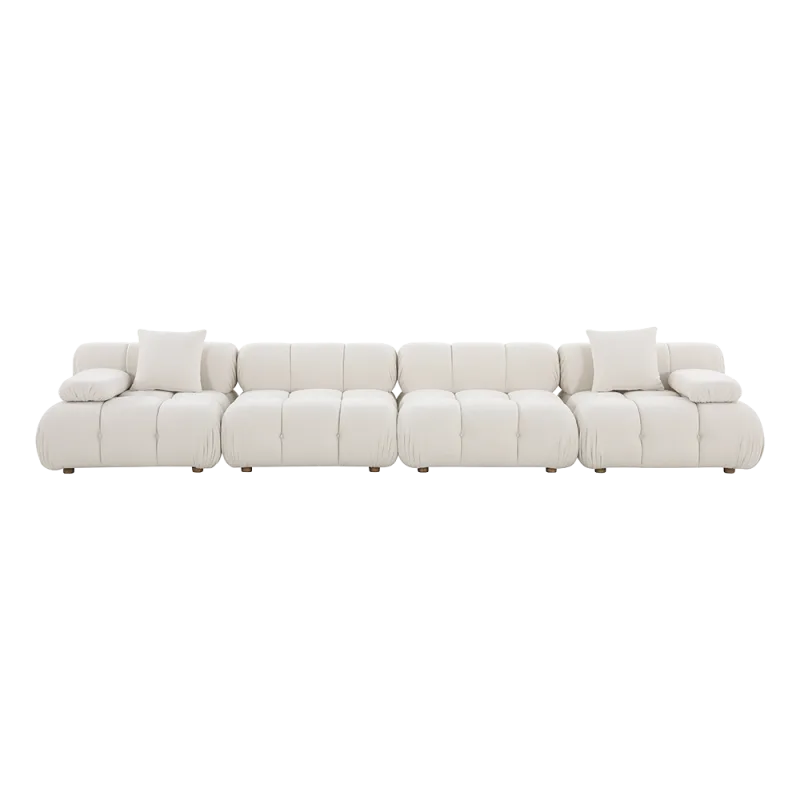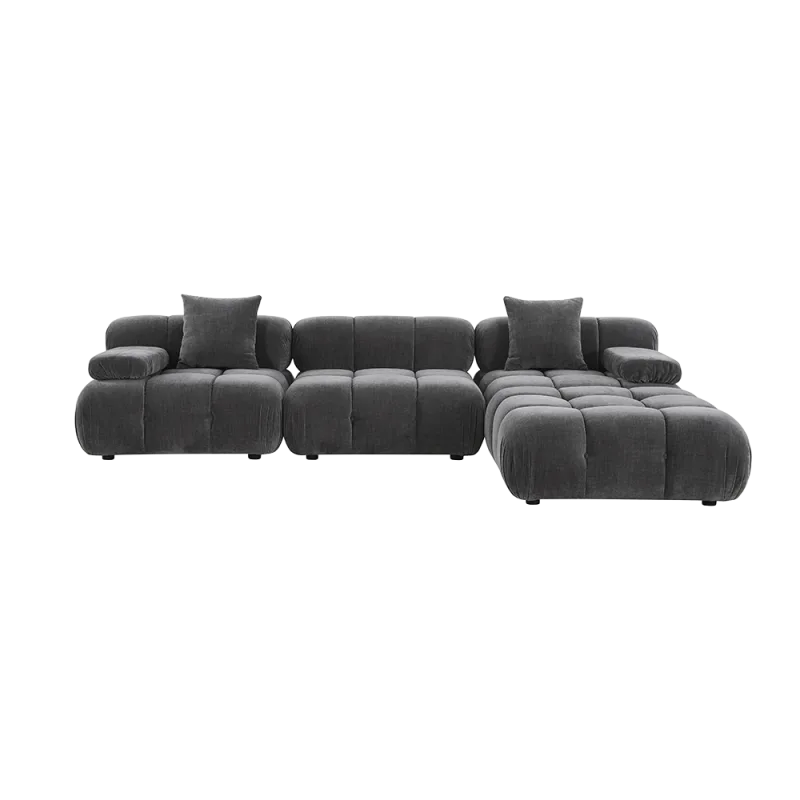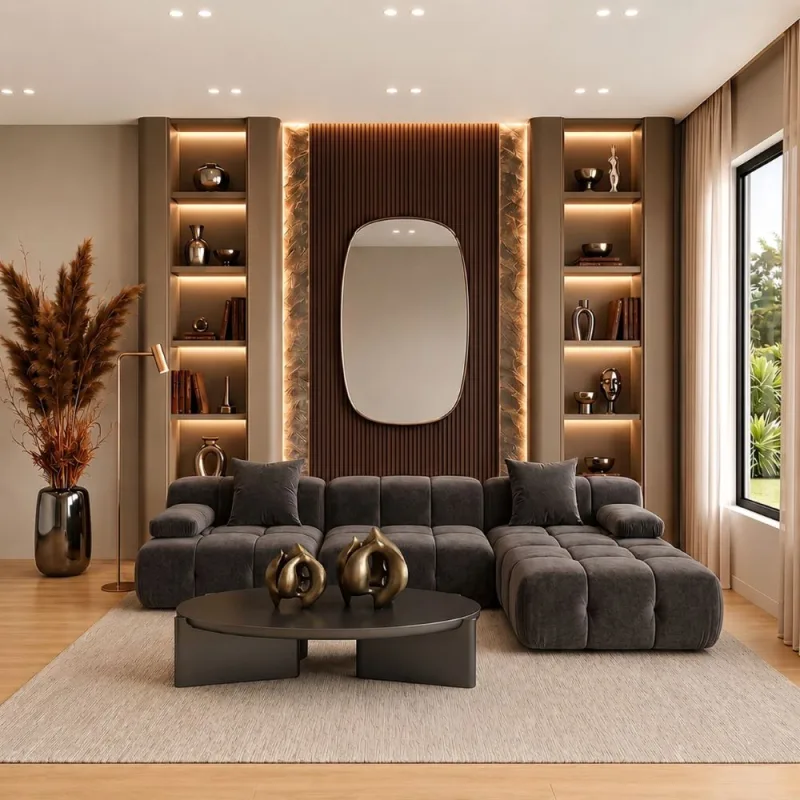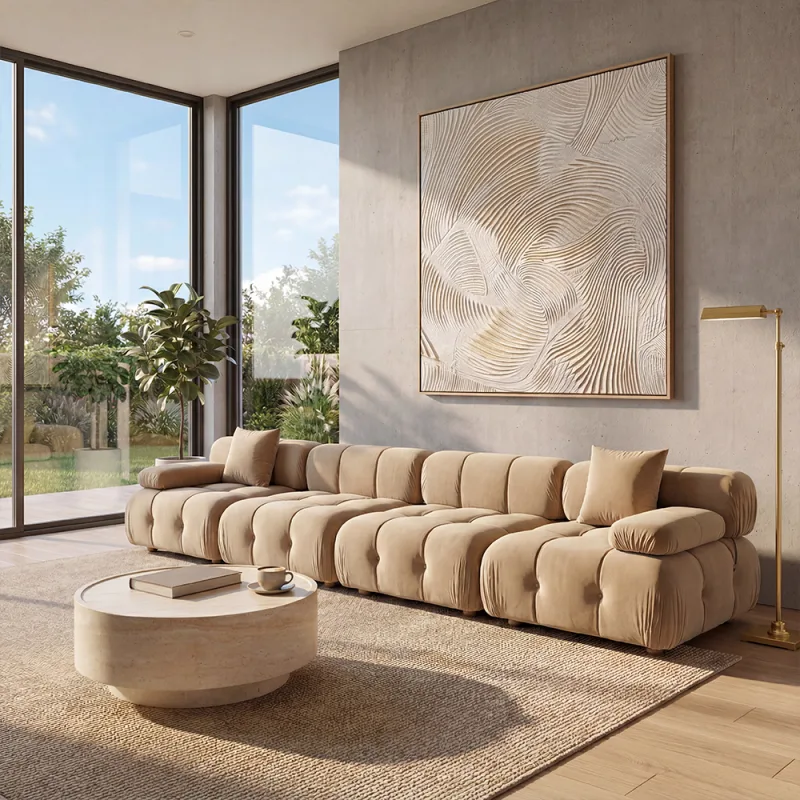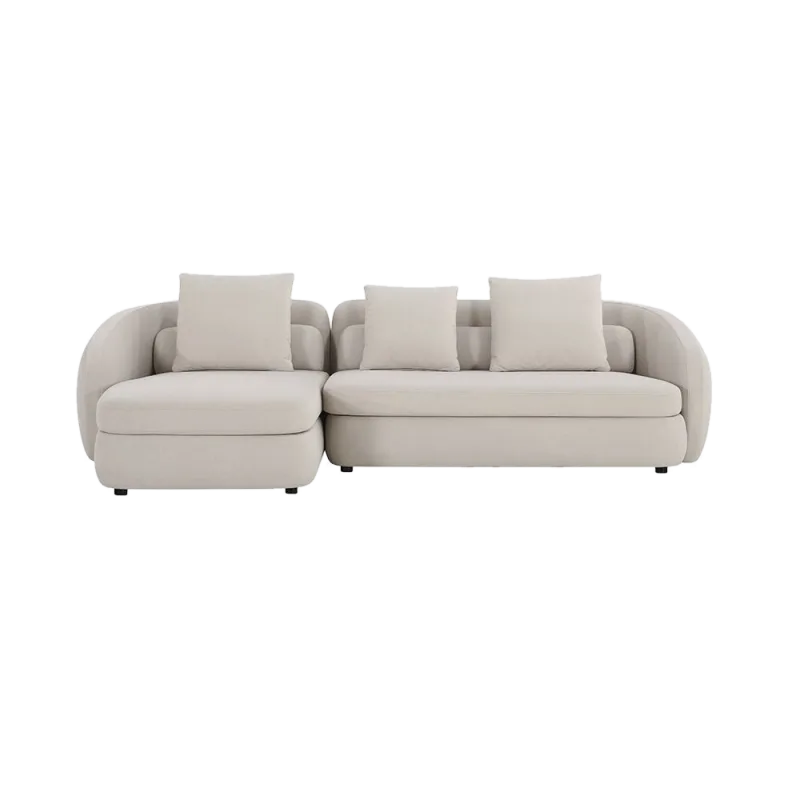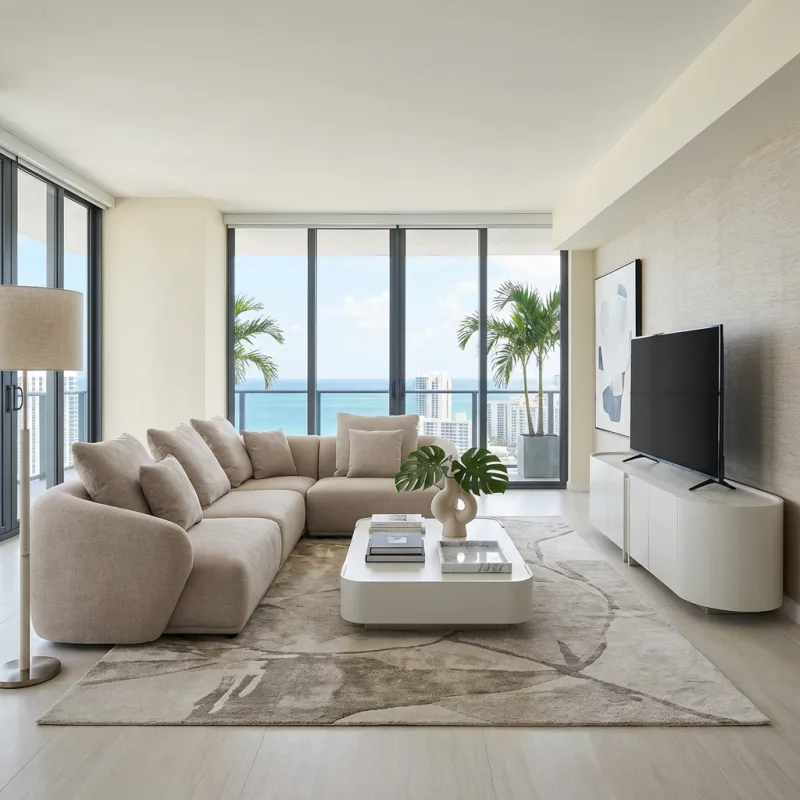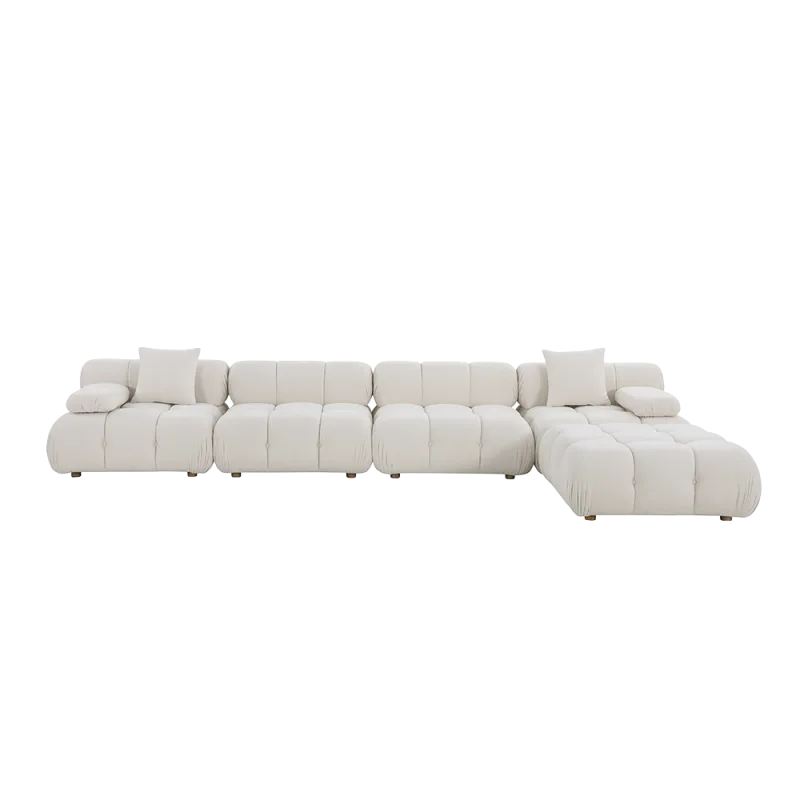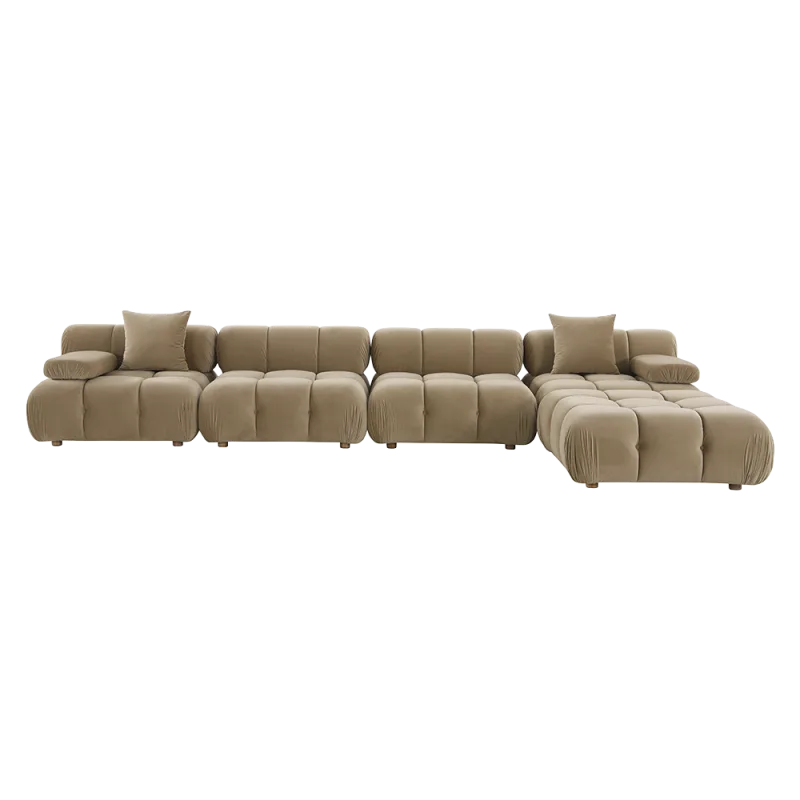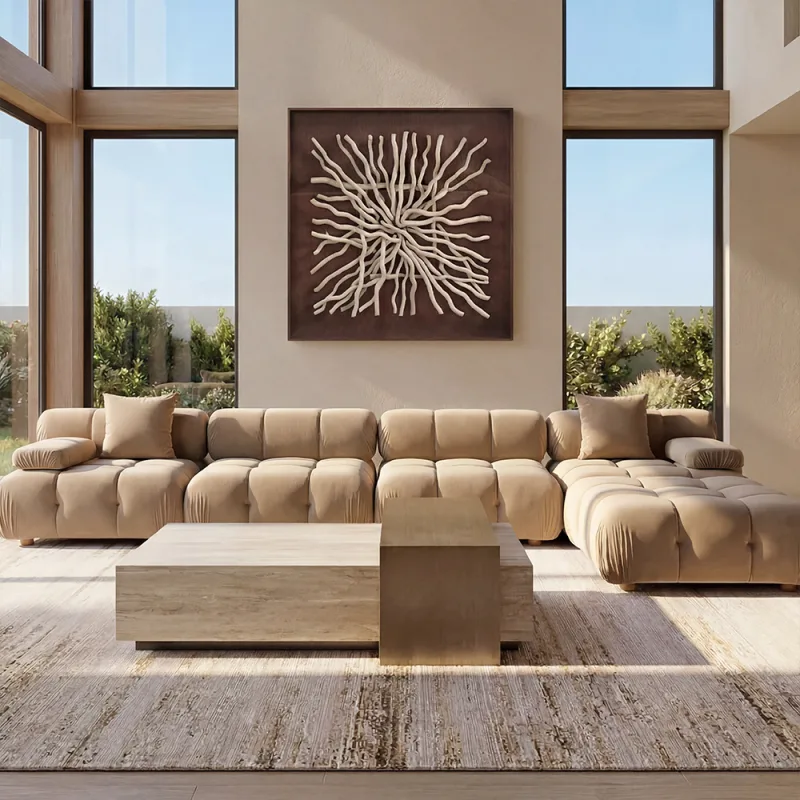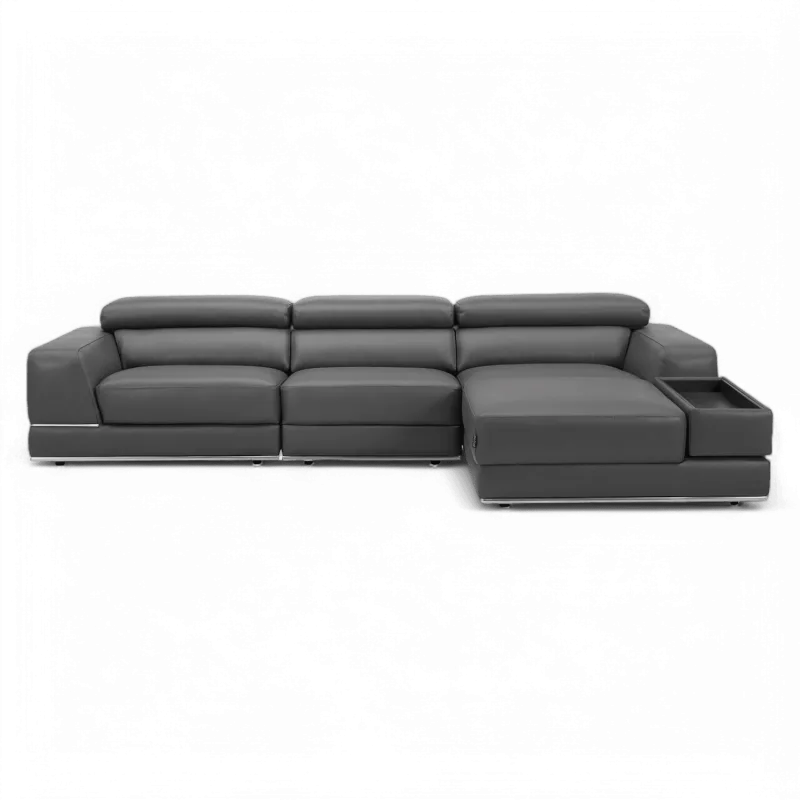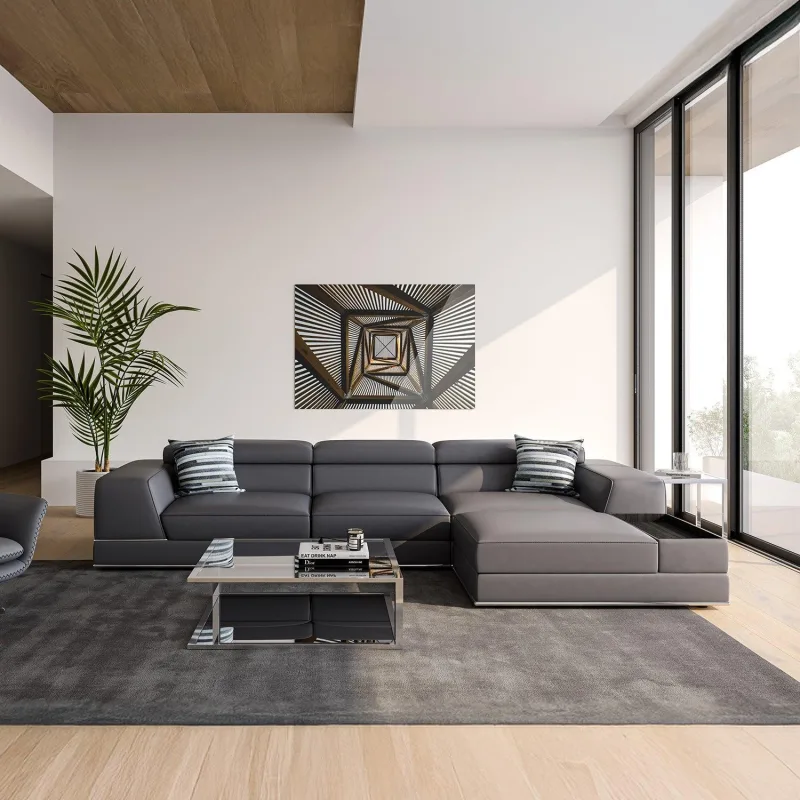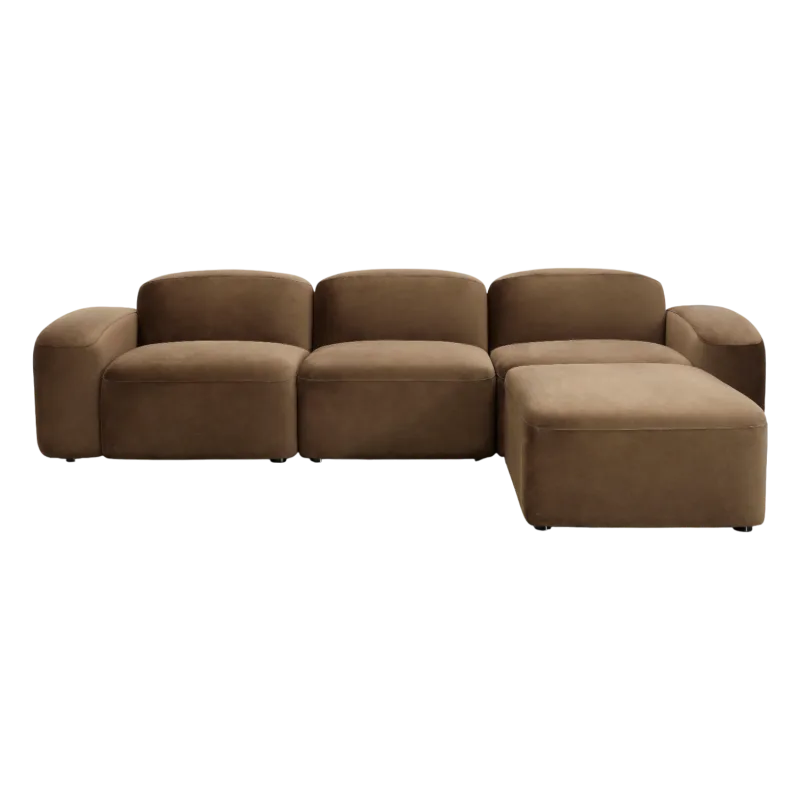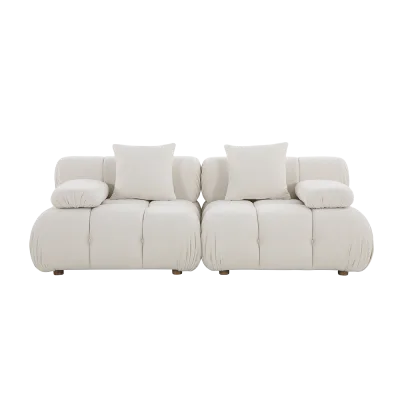
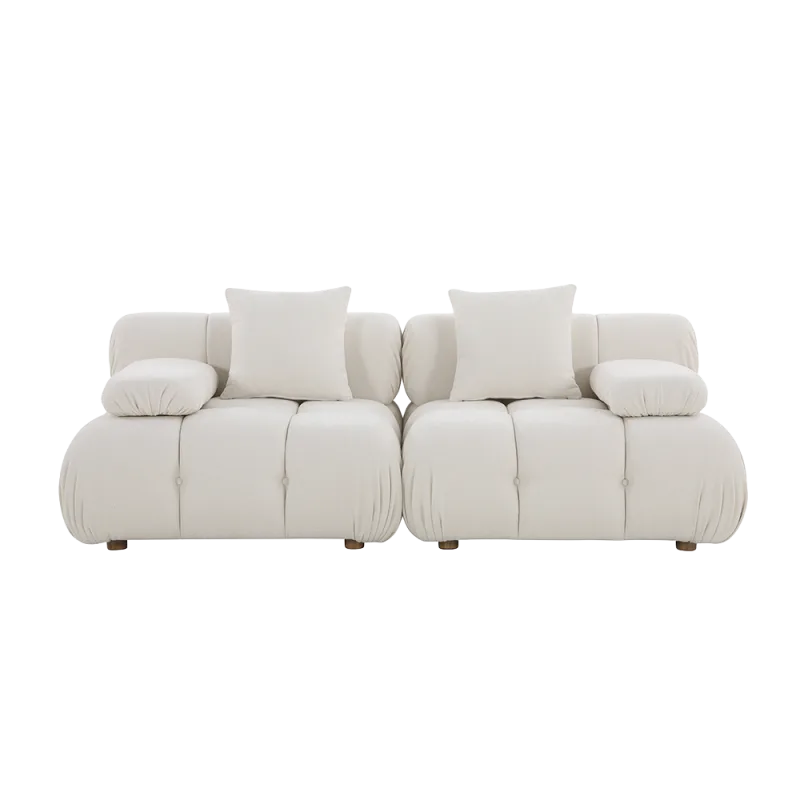
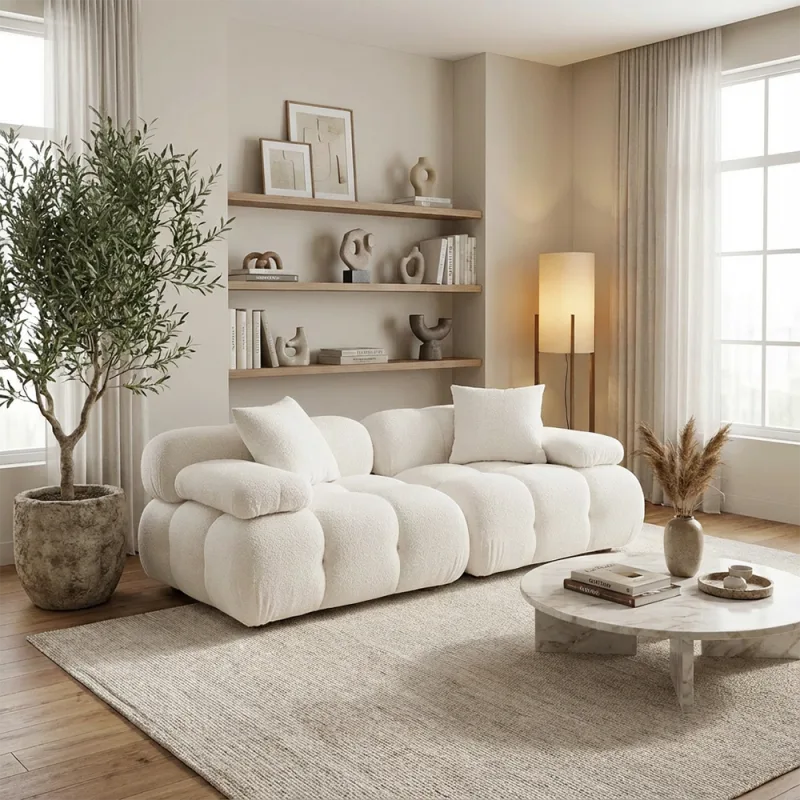
2-Piece Sofa in Off White with Contemporary Design
₹1,15,826
₹1,61,999
Made to order in Mumbai · Custom sizes and fabrics
A sectional sofa is built from separate pieces that sit together as one large sofa. You can arrange them as a straight sofa, an L or a U, add a piece later, or split them between two rooms. Every sectional here is made to order in your choice of size and fabric.
Before you buy
What to measure, which fabric to pick and how to choose between the designs above.
A sectional (also called a modular sofa) is a sofa made of individual units: armless seats, corner pieces, end pieces with one arm, chaises and sometimes ottomans. The units either clip together with brackets or simply sit side by side. Together they make one large sofa; apart, they become smaller pieces that fit through doors and lifts and can be rearranged.
The difference from an L shape sofa is that an L shape is designed as one fixed shape, even if it is delivered in two parts. A sectional is designed to change. That makes it the better choice if you are likely to move house, if your family is growing, or if you simply like to rearrange the room every few months.
| Piece | What it does | Typical width |
|---|---|---|
| Armless seat | Adds one seat in the middle of a run | 70–95 cm |
| Left or right arm end | Finishes a run with one arm | 85–110 cm |
| Corner piece | Turns the sofa 90 degrees | 90–110 cm square |
| Chaise | A deep seat for stretching out | 70–95 cm wide, 140–165 cm deep |
| Ottoman | Footrest, extra seat, or a chaise when pushed against a seat | 70–100 cm |
Most of the sectionals in this collection come as 2-piece, 3-piece or 4-piece sets, and many can be extended with extra units. When you order, tell us how you want to start, and we will make sure the pieces suit the layouts you might want later.
Three or four seats in a row. Useful when you first move in, or in a long narrow room.
Add a corner piece or a chaise to turn the run. The most popular layout for living rooms. See our L shape guide for orientation.
Two corners or two chaises facing each other. Very sociable, and ideal for a home theatre or a joint family. Needs a large room; see U shape sofas.
Two seats with arms become a 2 seater in the living room; the rest goes to a study or bedroom. Very handy during a move or a house renovation.
Seats arranged around an ottoman create a deep lounging area where the whole family can sprawl. Popular for TV rooms.
A sectional costs a little more than a fixed sofa of the same size, because each piece needs its own frame, ends and upholstery. You are paying for flexibility. It is worth it if:
If the sofa will stay in one room for a decade, a fixed 3 seater or L shape gives a slightly tidier look with no gaps between pieces. Our comparison sofa vs sectional goes into more detail, and our modular sofa guide explains connectors and configurations.
Sectionals used to mean big, boxy sofas. Today they come in several looks:
A 3-piece L shape sectional usually needs a room of at least 11 by 13 feet; a U shape needs around 14 by 16 feet. Plan for:
Tape the layout on the floor before you order. It takes ten minutes and saves arguments later. The same method works for every shape; see our sofa sizing guide.
The main complaint about sectionals is pieces sliding apart, especially on smooth tiles and marble, which are common in Indian flats. Good sectionals solve this with metal connector brackets under the seat frames. Ours use connectors on pieces meant to join, and we can add non-slip pads under the legs. If you plan to move pieces often, ask for the simpler clip connectors that release without tools.
Sectionals often have deeper seats than standard sofas, because people use them for lounging. A seat depth of 58 to 65 cm is common. If shorter family members find that too deep, add a few firm back cushions, or ask us to make the seat 54 to 56 cm deep. Cushions on modular pieces are usually separate per seat, which makes rotating them easy and keeps wear even.
Cushion filling matters on a sofa that gets this much use. High-density foam with a fibre wrap holds its shape; feather blends feel softer but need daily plumping. Read foam, fibre or feather before choosing.
Because the pieces can be moved, they should wear evenly. Choose a fabric with a good rub count and a colour that will not show fading if one piece sits near a window. Performance weaves, velvet and boucle are popular choices. Pale boucle looks beautiful on a curved modular sofa, but it is a better match for adult households than for homes with pets. Read what rub count means for durability numbers.
In a joint family, the living room often has to seat six or eight people every evening and a dozen during festivals. A sectional handles this better than any fixed sofa. Arrange it as a U for everyday use, then pull one end piece out to face the dining area when relatives visit. Older family members can take the end seats with arms, which are easier to get in and out of, while children pile onto the chaise. Our guide to living rooms for joint families has layouts for larger households.
For a home theatre, a sectional with a chaise at each end, or a row of seats facing the screen with ottomans in front, gives everyone a view and somewhere to put their feet. If you want reclining seats, see recliner sofas, some of which are modular as well. Keep the front row 1.5 to 2.5 times the screen size away from the TV, and choose a darker fabric that does not reflect light from the screen.
The price of a sectional is the sum of its pieces, so it grows with the layout. Each unit carries its own frame, base, cushions and upholstered sides, which is why a 3-piece sectional costs more than a fixed 3 seater of the same length. The frame material, foam density, fabric and connector hardware make the rest of the difference. Starting prices on each product page are for the configuration shown; if you want a different number of pieces or a different fabric, we confirm the revised price before production. Read sofa prices in India for a broader picture.
One of the best things about a made-to-order sectional is that we can make matching pieces later. Keep your order number; it records the fabric, foam and frame details. Fabric dye lots can vary slightly over time, so if you think you will extend the sofa within a year or two, it is worth ordering an extra piece or a matching ottoman at the start.
Sectionals are the easiest large sofas to deliver. Each piece travels separately and fits most lifts. We place and connect the pieces in your home. Share your lift and door measurements anyway, especially for chaise pieces, which are longer than seat units. If you live on a high floor in an older building with a small lift, tell us when you order: we can plan the order in which pieces arrive so the delivery team is not left waiting in a corridor with a chaise that does not turn. See how to measure for a sofa.
Swap seat units around every few months so the favourite spot does not wear out first. Vacuum between the pieces, where crumbs collect. Check connectors every few months and tighten them if needed. In the monsoon, separate the pieces for a day now and then to let air reach the inside faces.
Send us your wall length and a photo of the room. We will suggest sofas that fit and the fabrics that suit your home.
Send room size on WhatsApp