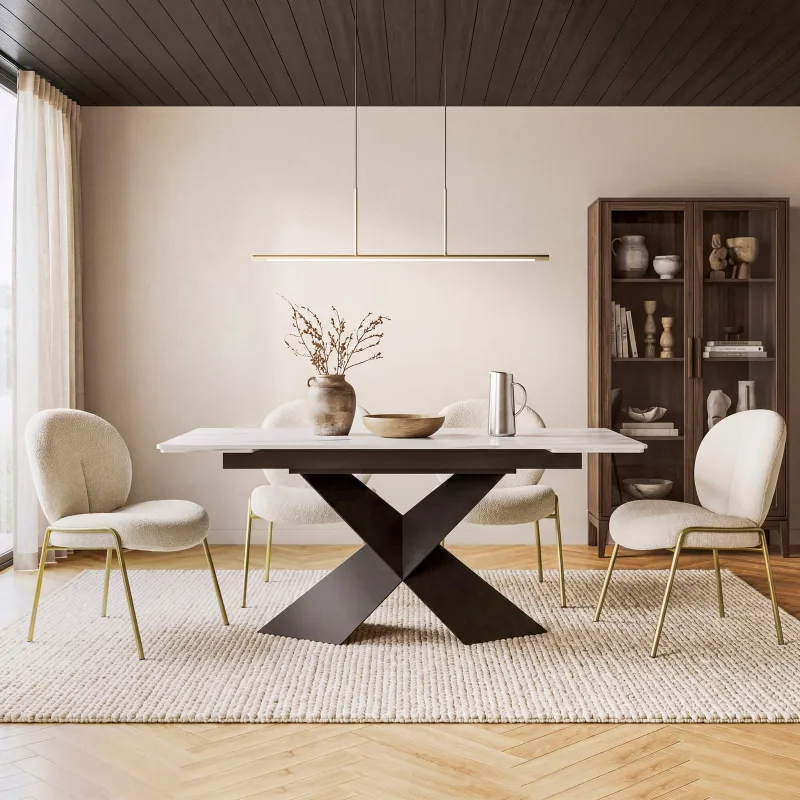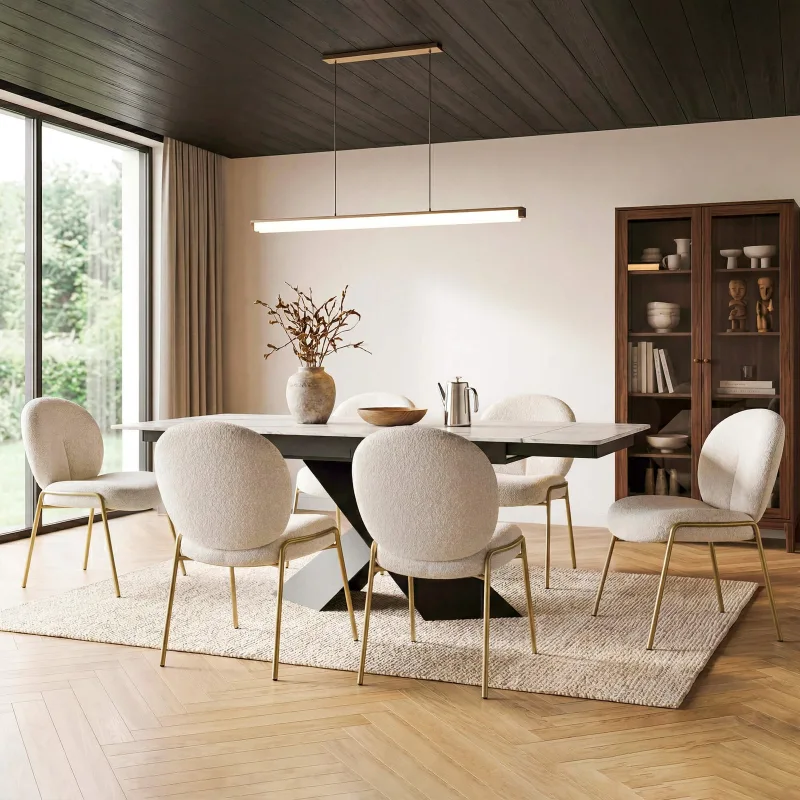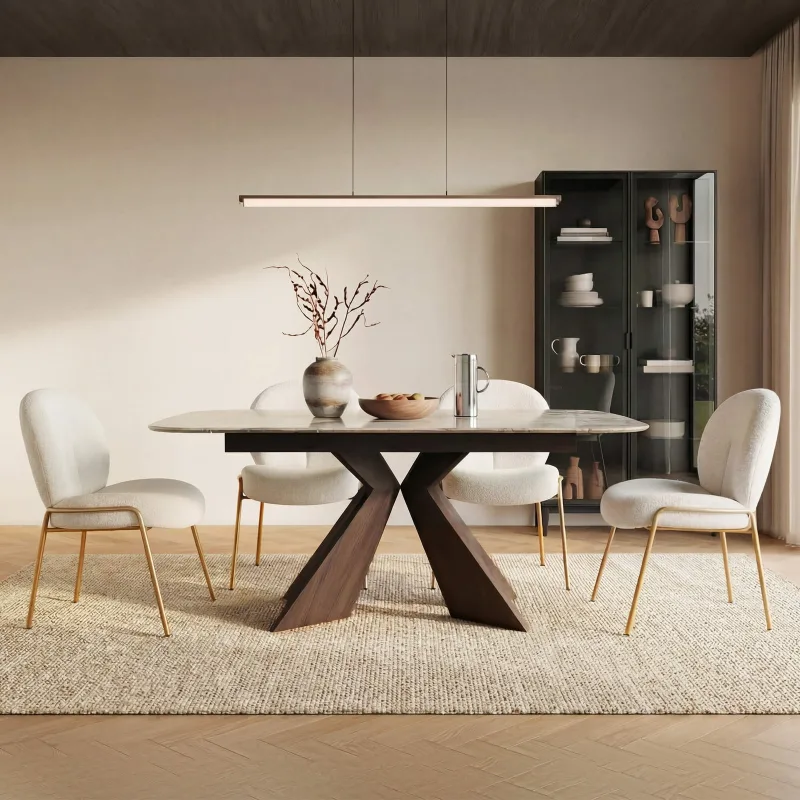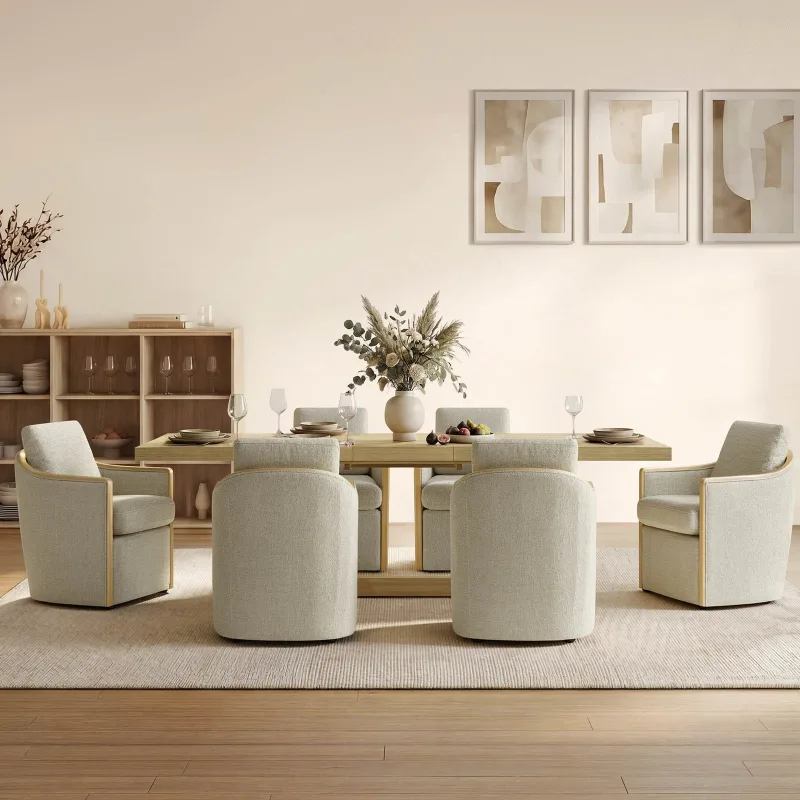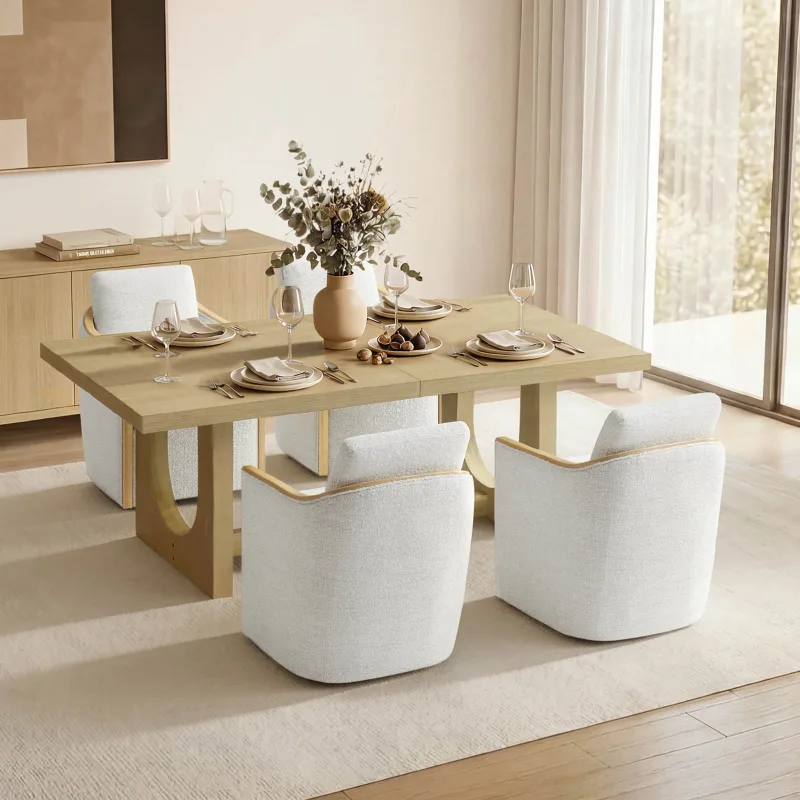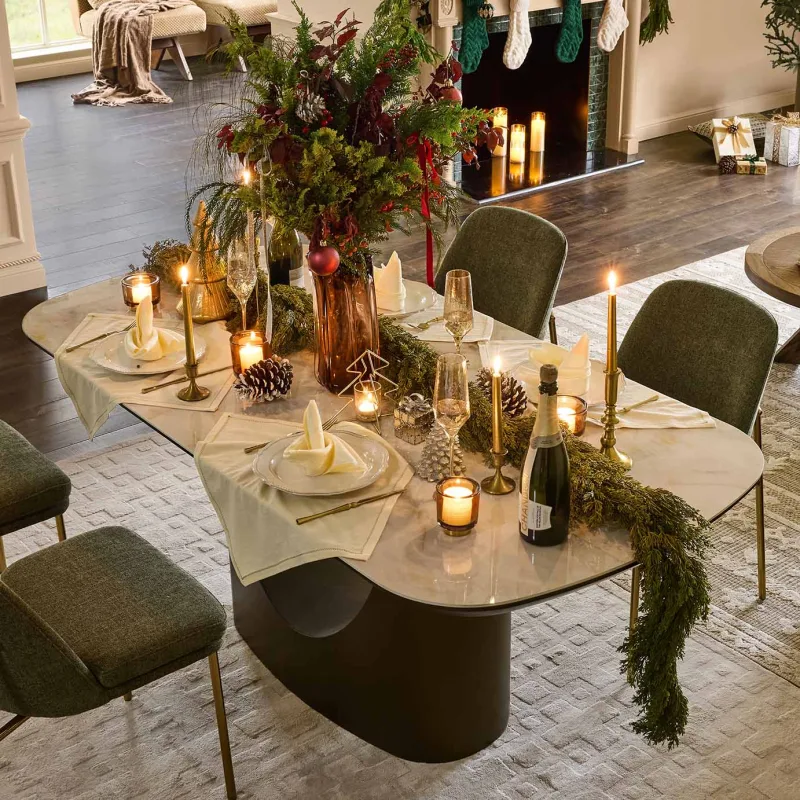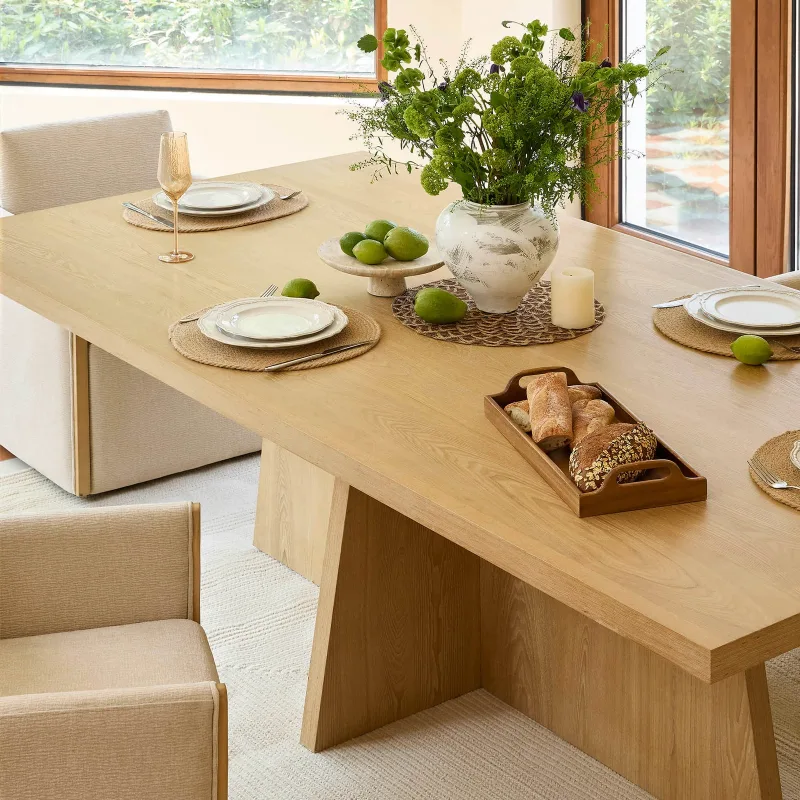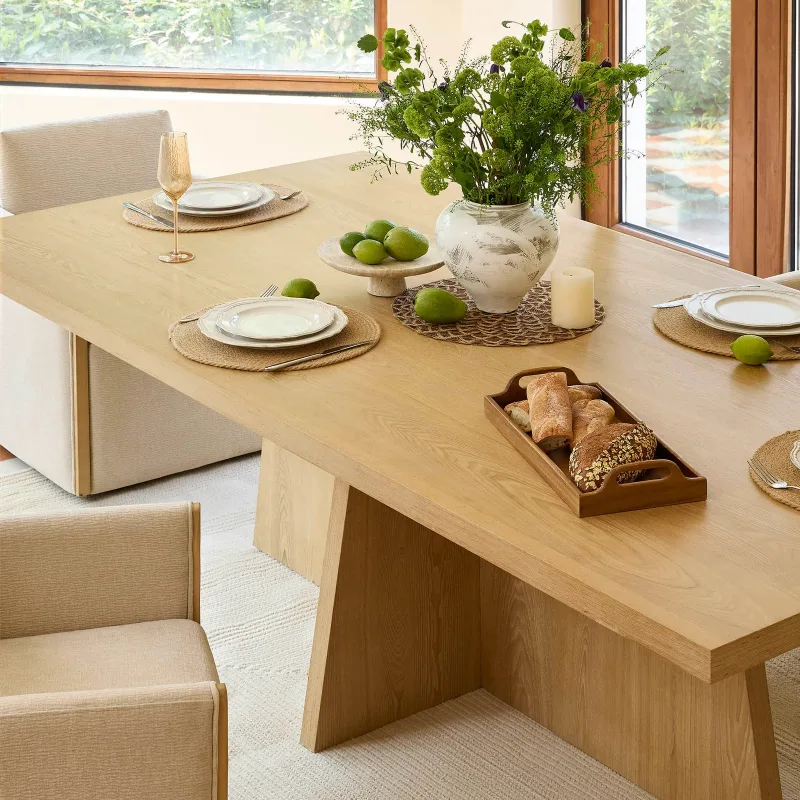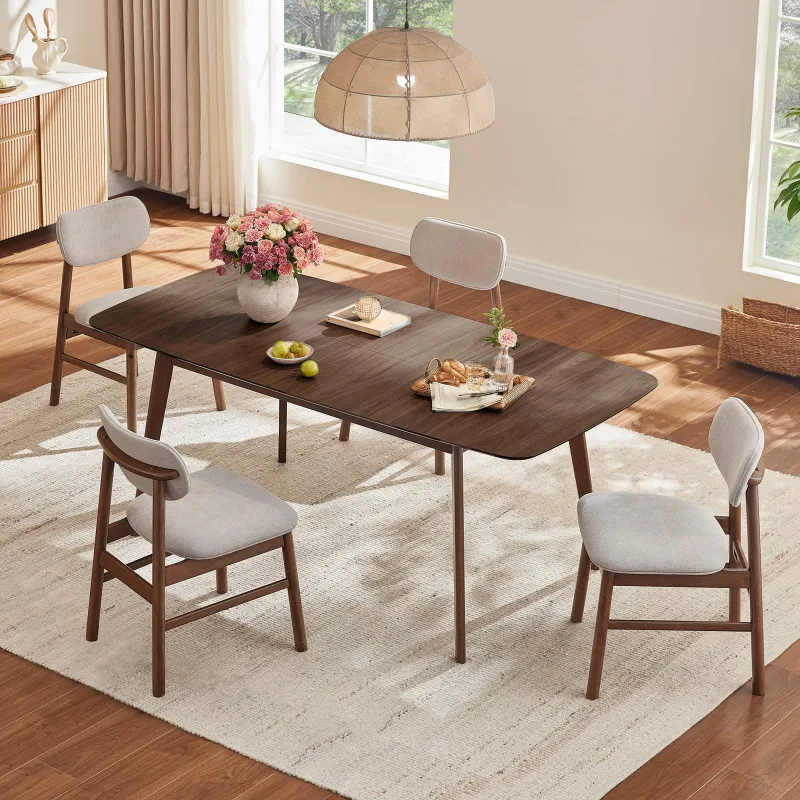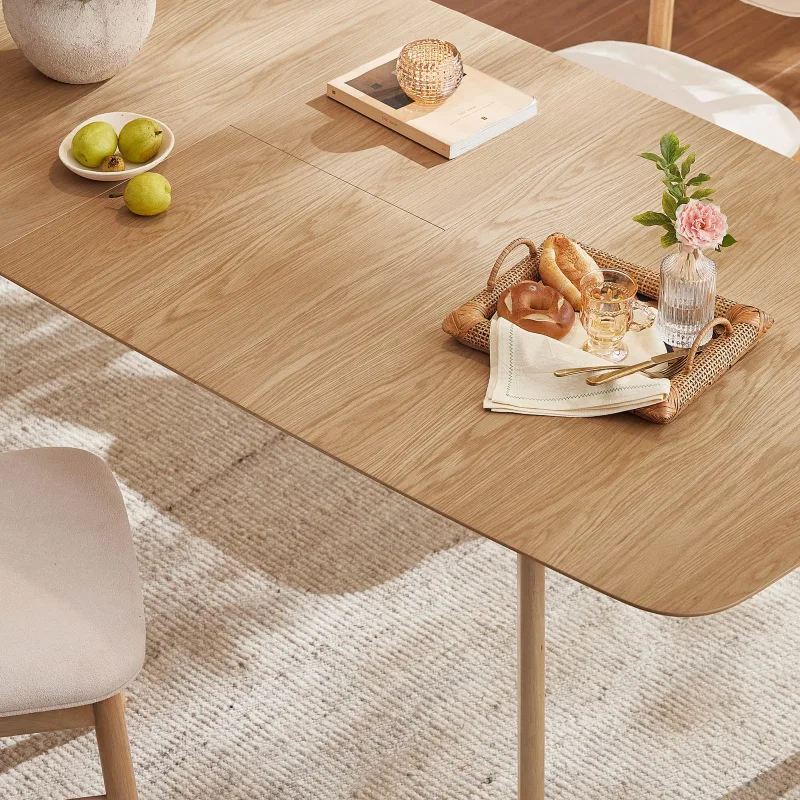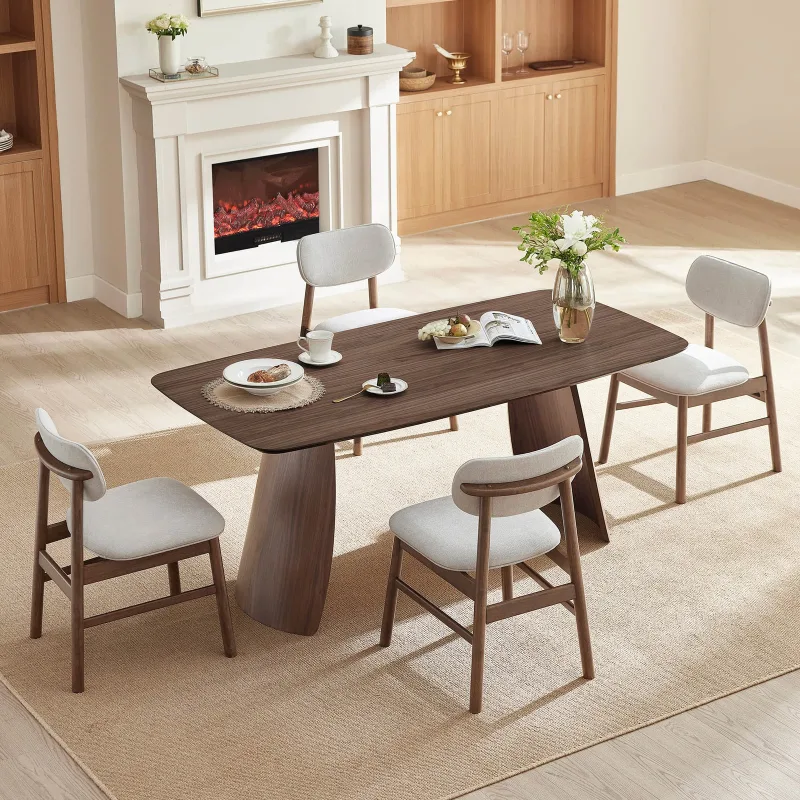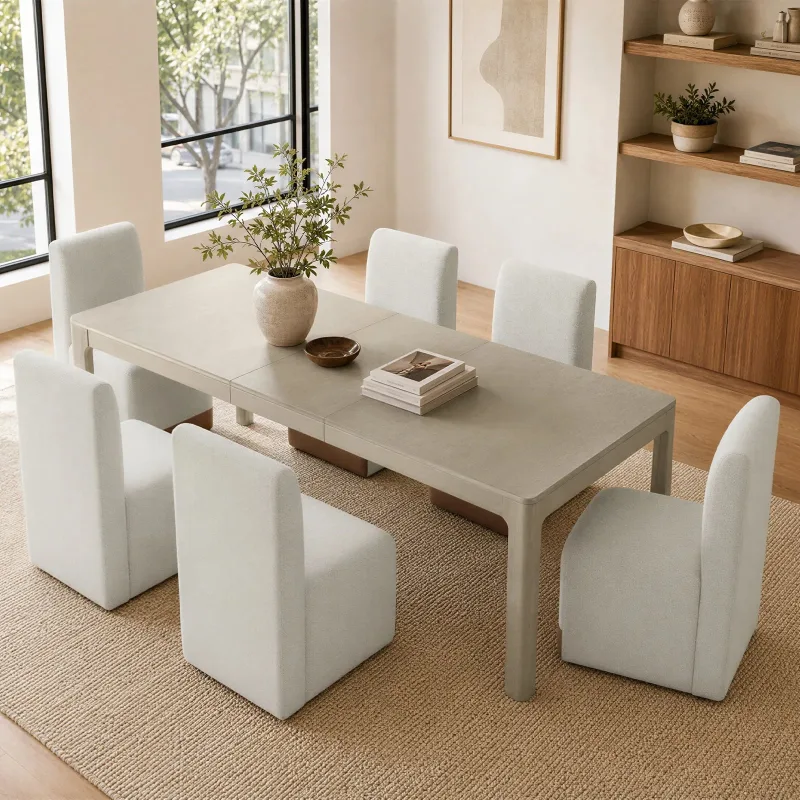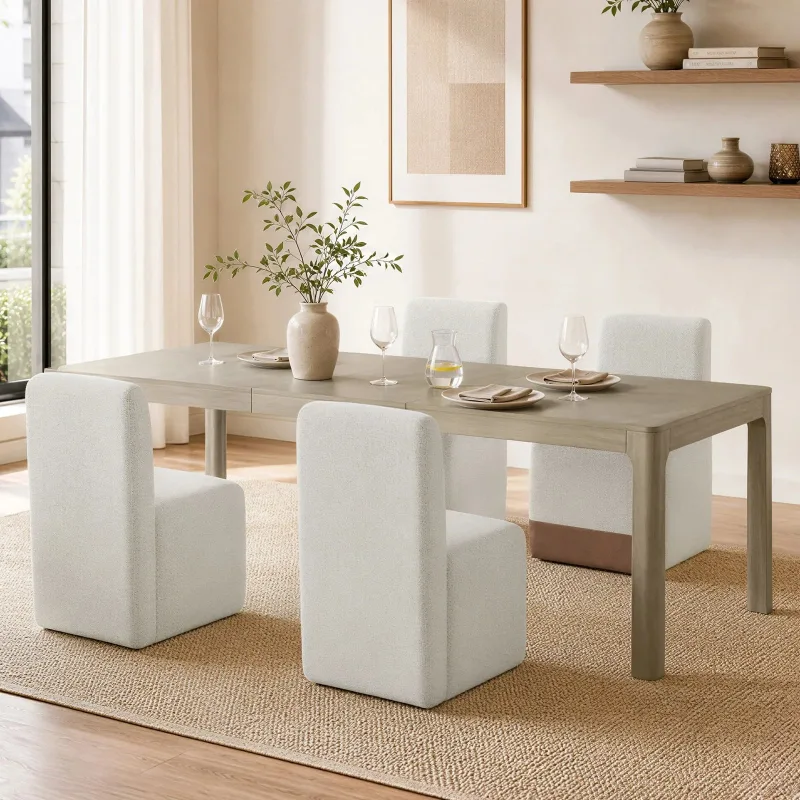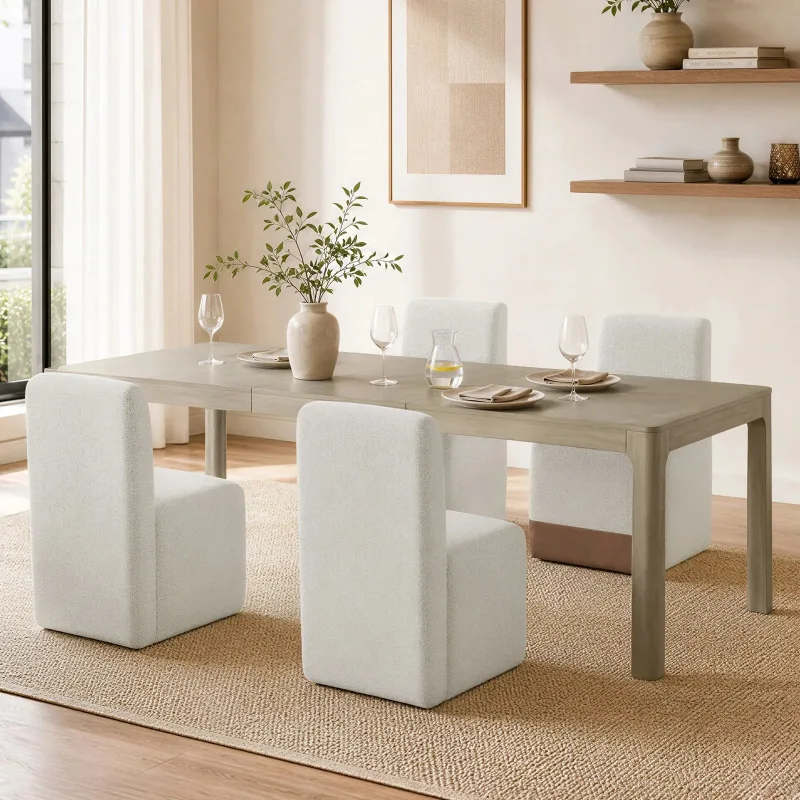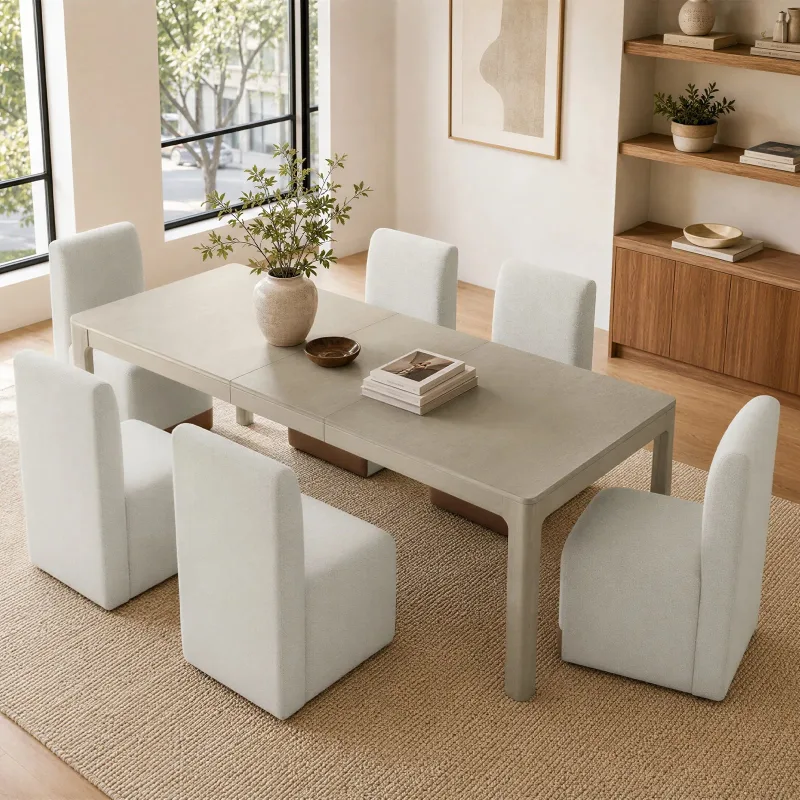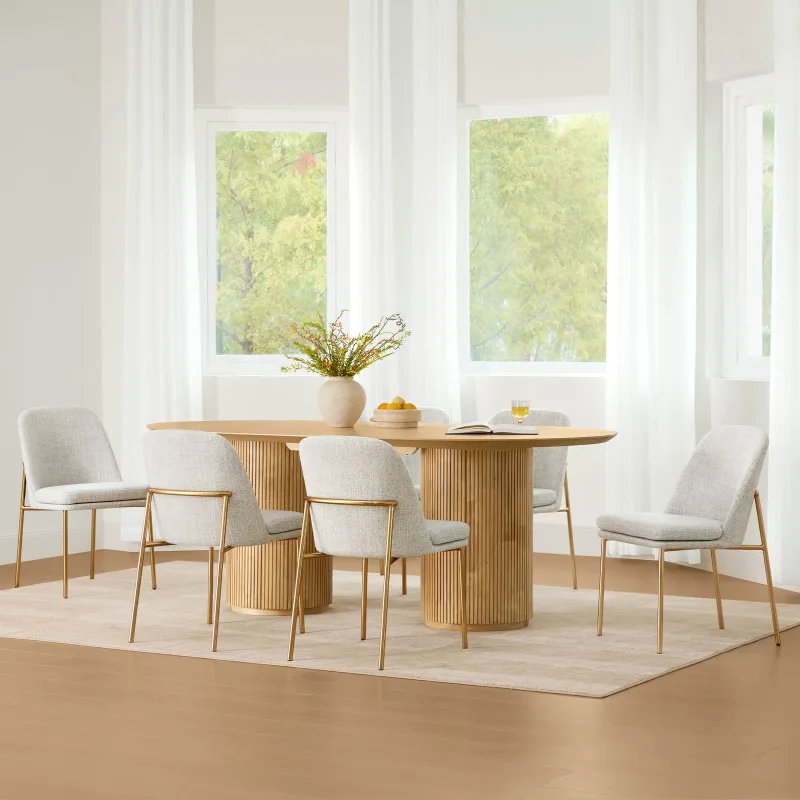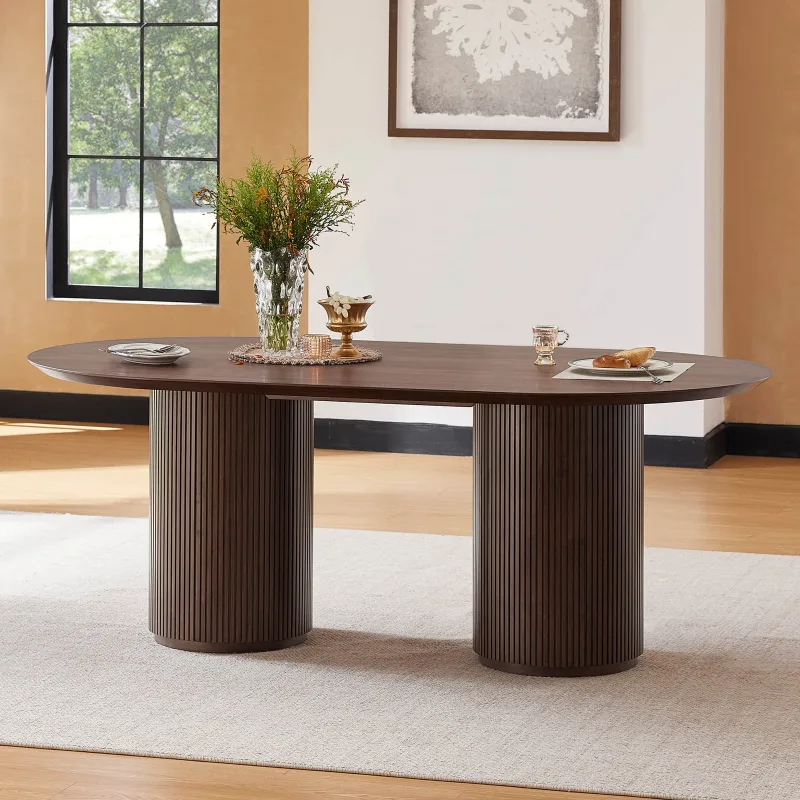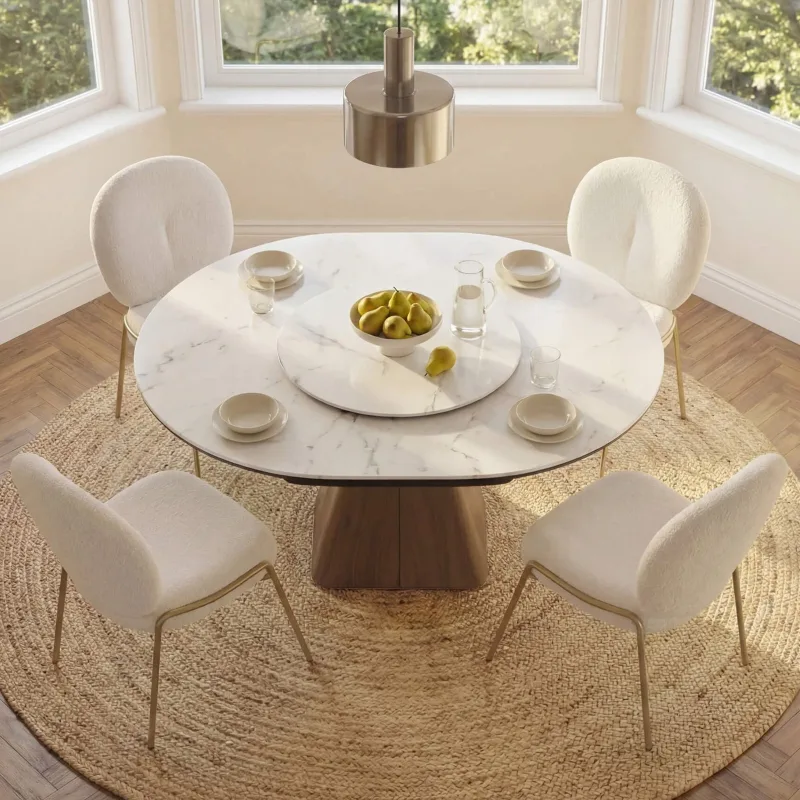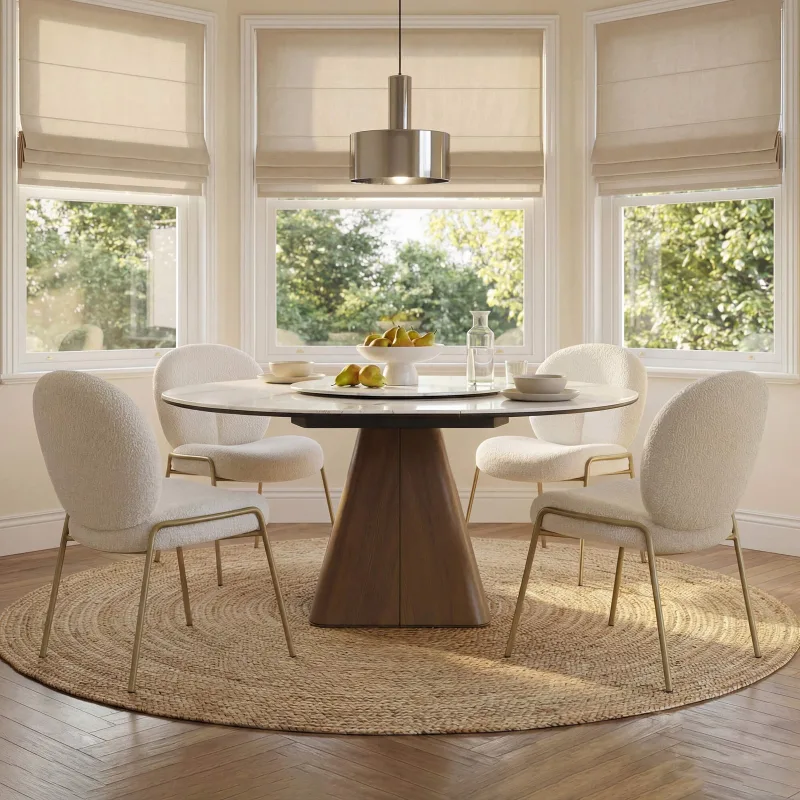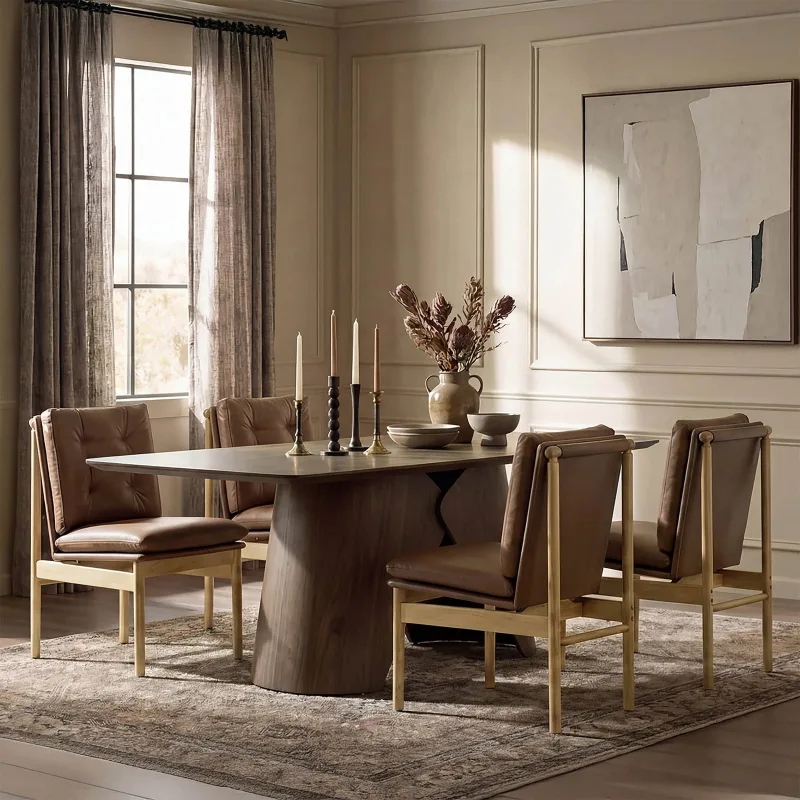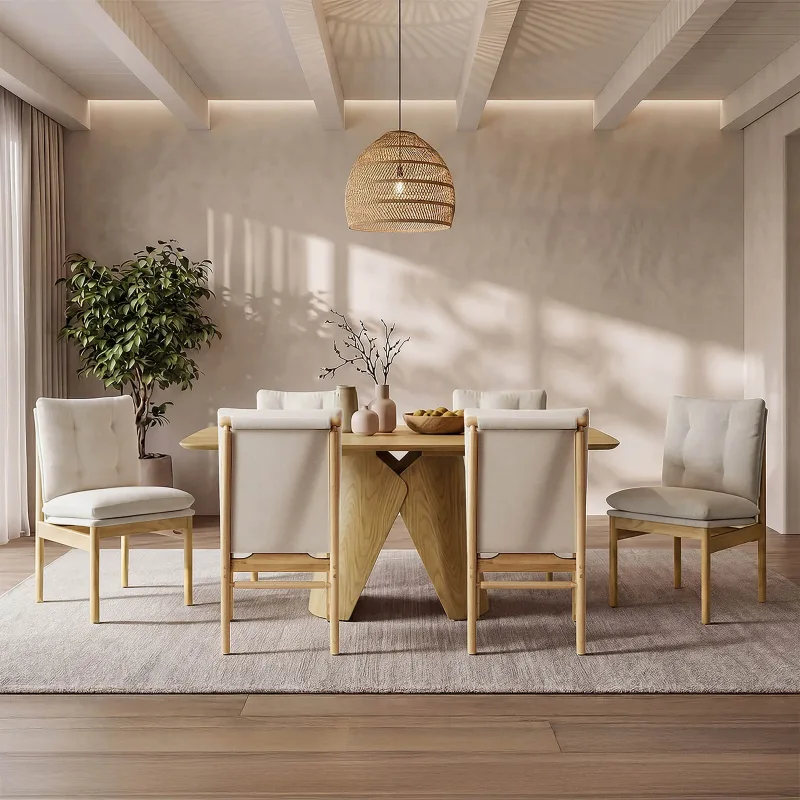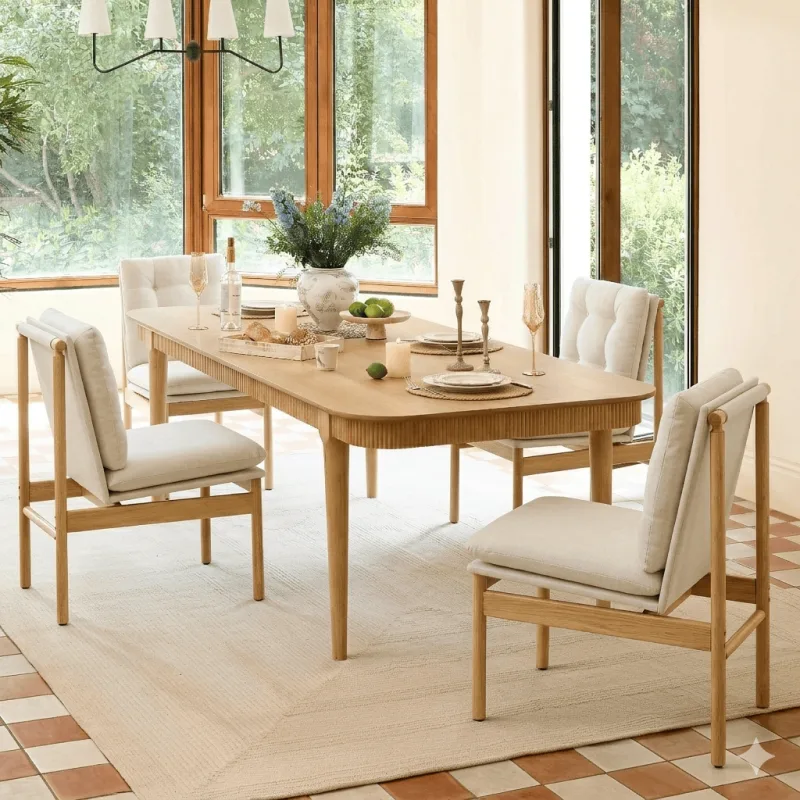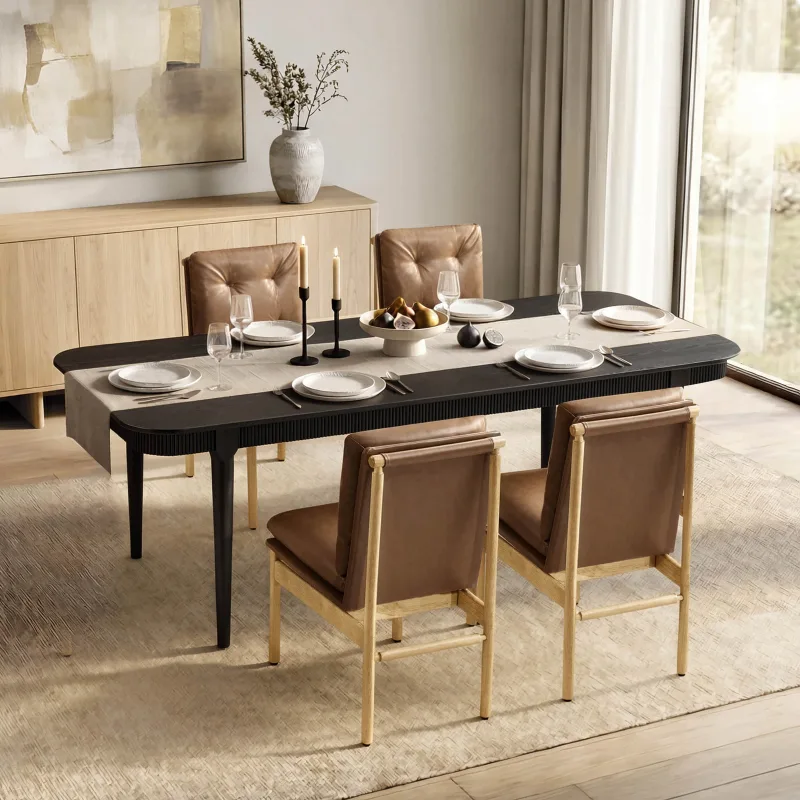

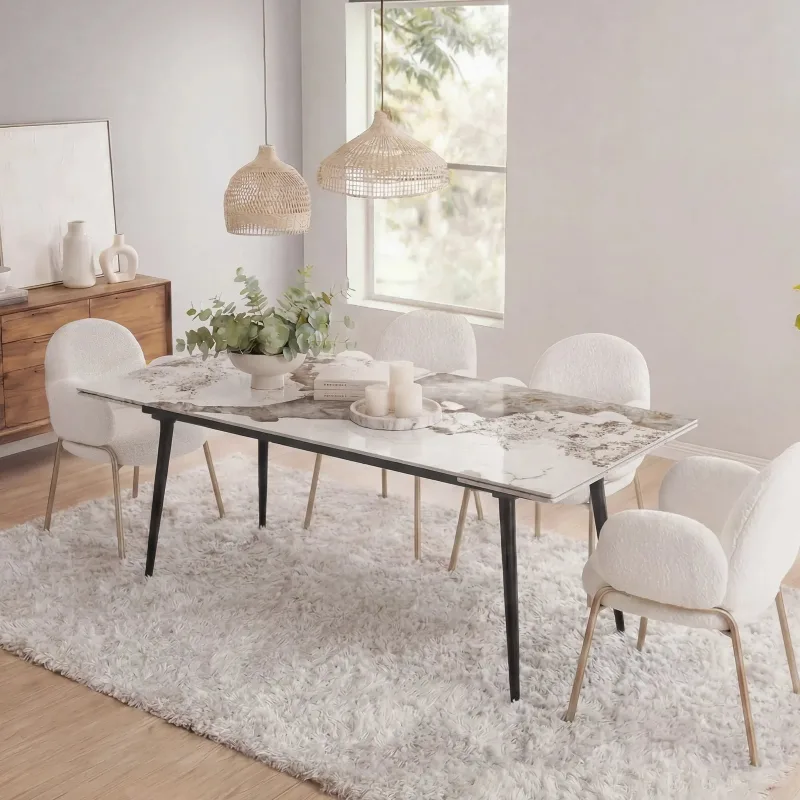
Teresa extendable dining table
₹1,46,704
₹1,57,199
Made to order in Mumbai · Custom sizes and fabrics
Our dining tables seat four to eight, in round, oval and rectangular shapes, with tops in sintered stone, marble, travertine and wood. Several extend for festival lunches and family visits. They suit compact dining corners in 1 and 2 BHK flats as well as long tables in open living and dining rooms. Every table is made to order in Mumbai, so the length, top and finish can be adjusted to your room before we build it.
Before you buy
What to measure, which fabric to pick and how to choose between the designs above.
Start with the number of people who eat together on an ordinary day, not the number at Diwali. Choose a table that seats them comfortably, then decide whether you need extra seats a few times a year; if you do, an extendable table or a bench solves it better than a permanently oversized top. Next, measure the dining area and subtract the space chairs need. Only then choose shape and material.
Families often reverse this order, fall for a beautiful marble top, and then find it seats six in a room that only fits four. Our dining table size guide explains the measuring step by step.
Each person needs about 60 cm of table edge to eat without bumping elbows, and the table needs to be at least 80 cm wide so plates and serving dishes fit down the middle.
| Seats | Rectangular | Round | Oval | Room needed (approx.) |
|---|---|---|---|---|
| 4 | 120–140 × 80–90 cm (4–4.5 ft) | 90–110 cm across | 140 × 90 cm | 2.7 × 3.0 m (9 × 10 ft) |
| 6 | 160–180 × 90 cm (5.5–6 ft) | 120–135 cm across | 170–180 × 100 cm | 2.7 × 3.5 m (9 × 11.5 ft) |
| 8 | 200–240 × 95–100 cm (6.5–8 ft) | 150–160 cm across | 210–230 × 105 cm | 2.9 × 4.1 m (9.5 × 13.5 ft) |
A table of about 160 cm seats four generously or six closely; at 180 cm six people sit comfortably. Most of our extendable designs start near 180 cm and open to between roughly 220 and 245 cm, which takes eight. If you are torn between sizes, read 4 seater vs 6 seater dining tables and 6 seater dining table sets.
Leave about 90 cm between the table edge and a wall or furniture behind the chairs. That is enough to pull a chair out, sit down and let someone squeeze behind. If a main walkway runs behind the chairs, for example to the kitchen or balcony, make it 110 to 120 cm. In a tight corner, 75 cm works for a side where people sit but nobody needs to pass.
A simple formula: add 180 cm to the length and to the width of the table, and that is the floor space it really uses. Check that this rectangle does not block the kitchen door, the fridge door or a sliding balcony door.
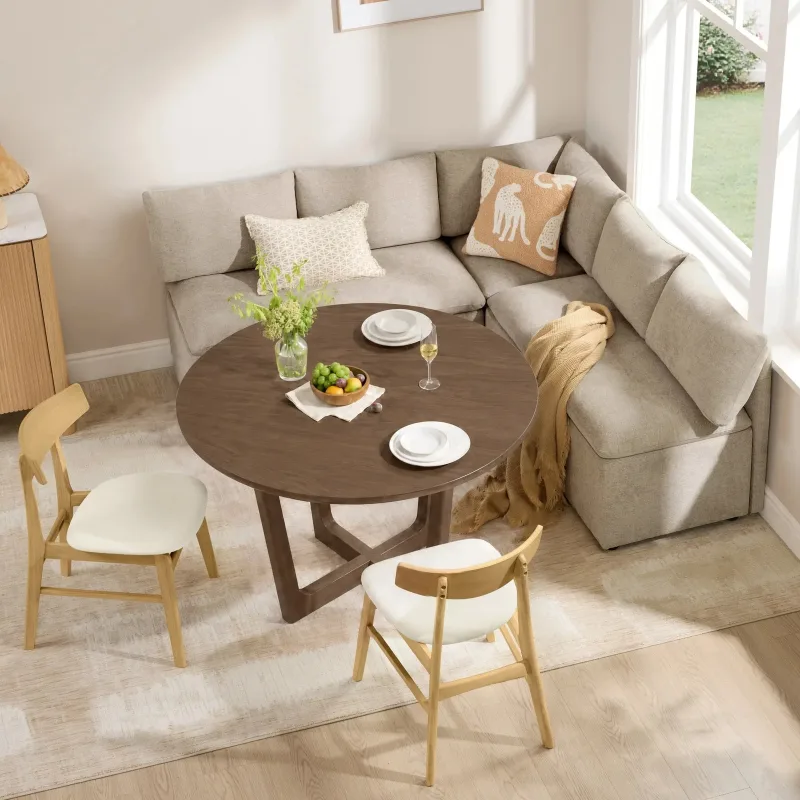
Round tables suit square rooms and small dining corners. Everyone can see and talk to everyone else, there are no corners for children to bump, and an extra chair can always squeeze in. On a pedestal base they are the most efficient way to seat four in a small flat. Above about 150 cm across, people opposite are too far apart to pass dishes, so round tables are best for four to six.
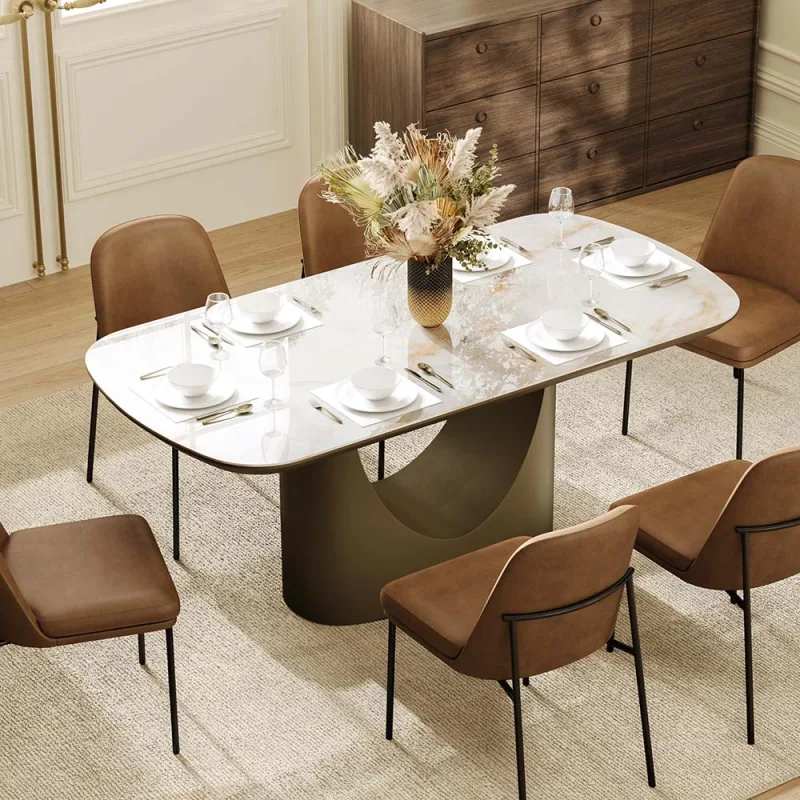
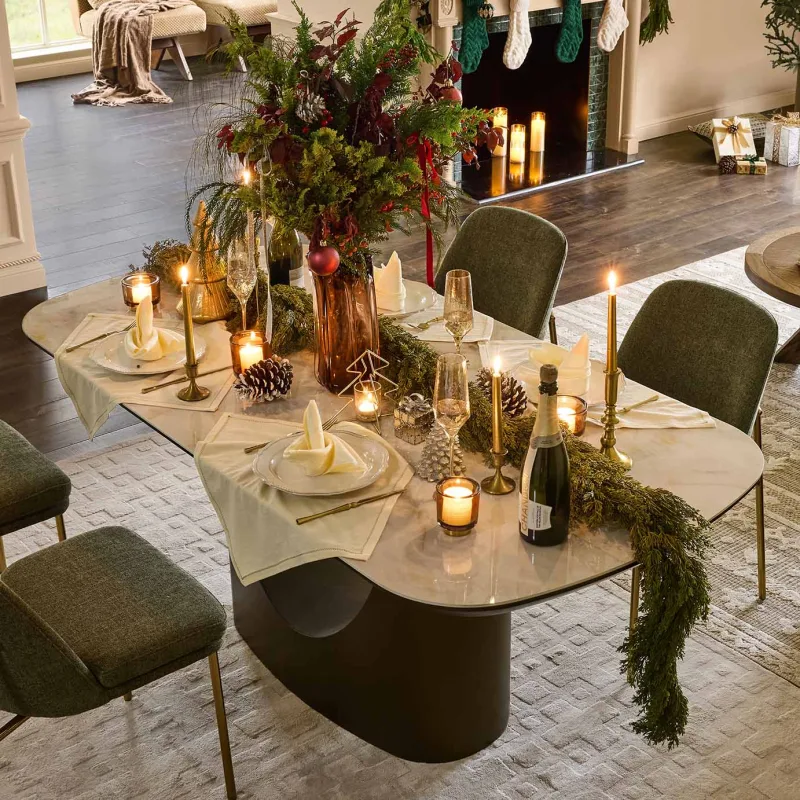
An oval gives the seating of a rectangle with softer ends. It is easier to walk around in an open plan room, and the curved ends take an extra chair each. If your dining space opens into the living room, an oval often looks lighter than a rectangle of the same length.
The most common shape, and the best for long, narrow rooms and for eight or more. It sits neatly against a wall with a bench on one side and fits the straight lines of most Indian flats.
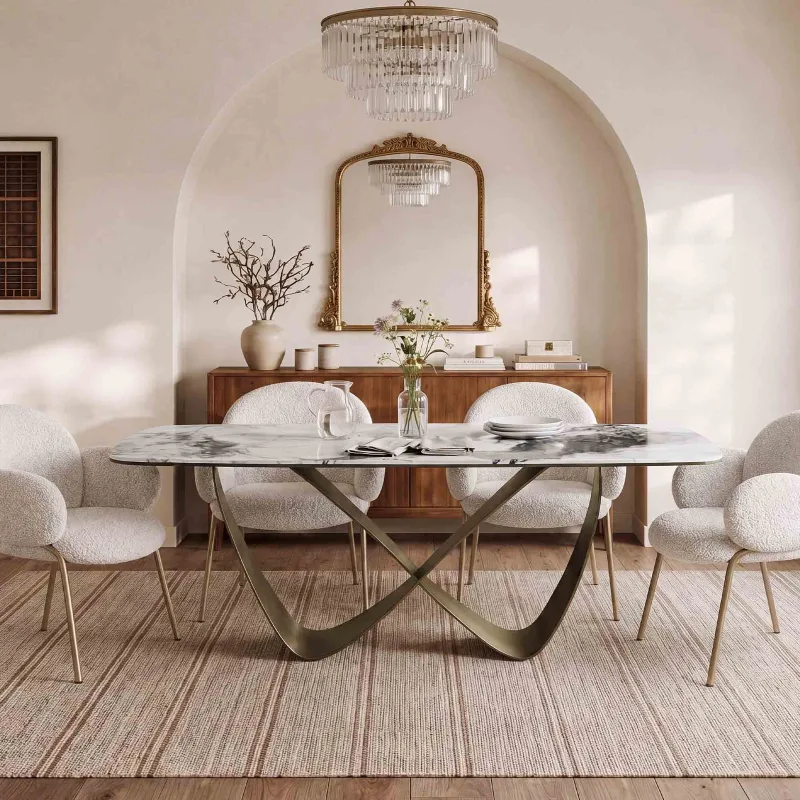
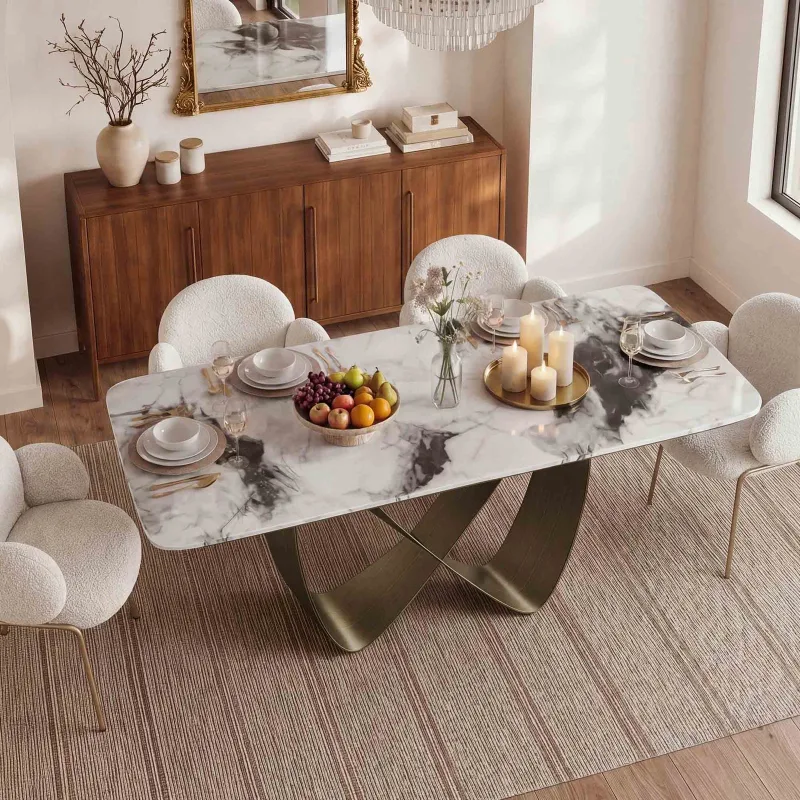
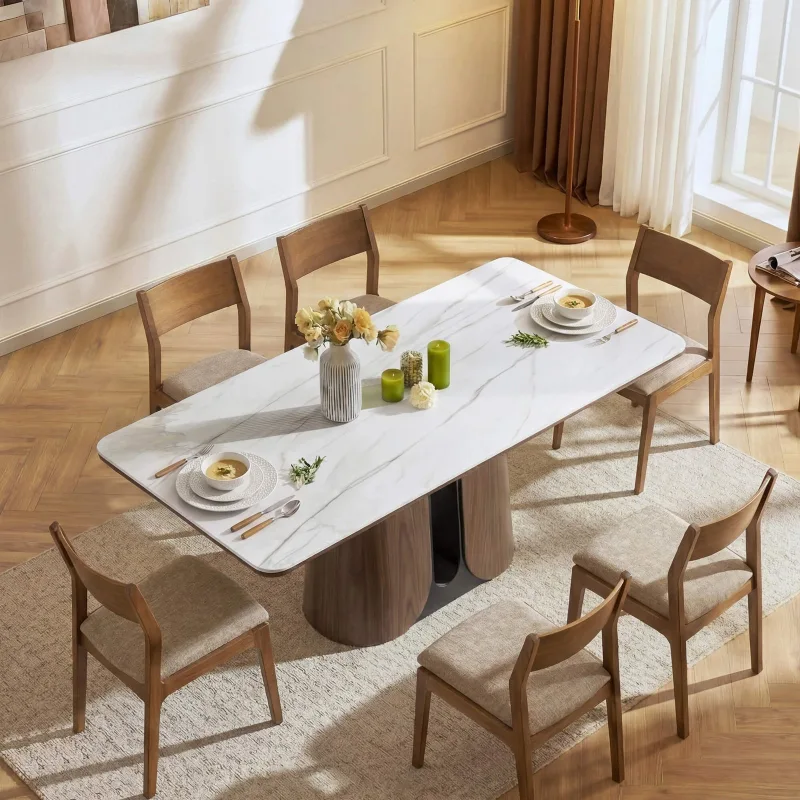
The base is easy to overlook and makes a big difference to comfort. Four legs at the corners give the most knee room along the sides, but the corners themselves cannot take a chair. A central pedestal, cross base or sculptural base lets chairs go anywhere, including the ends, as long as the top is not so large that it becomes unstable. U-shaped and loop bases, which sit in from each end, leave the long sides completely free but can catch the feet of whoever sits at the head of the table.
Before ordering, sit at a similar table if you can and check where your knees and feet land. Also check the apron (the frame under the top): there should be at least 63 cm from the floor to the underside, so knees and chair arms clear it.
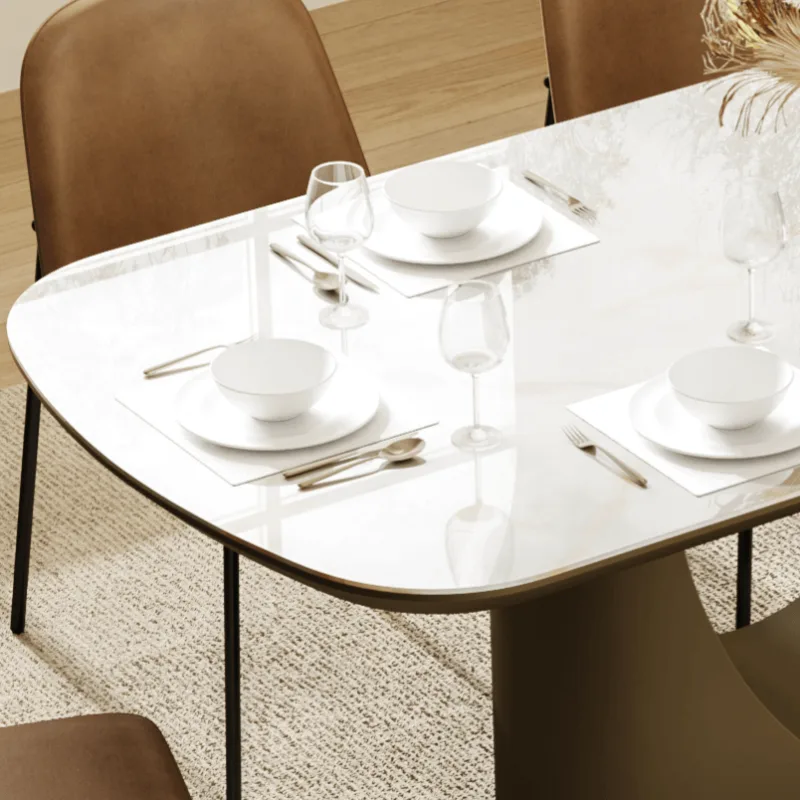
Sintered stone is made by fusing natural minerals under very high heat and pressure. The result is a dense surface that resists heat, scratches and stains far better than natural stone. Turmeric, oil, tea and achaar wipe away, and a hot serving dish will not mark it, though a trivet is still kind to it. The one weakness is the edge: a hard knock from a steel vessel can chip it. It is the most practical top for families who cook and eat Indian food at the table every day.
Marble is cool, heavy and every slab is different. It handles heat well but is porous and reacts to acids: lemon, tamarind, vinegar and tomato leave dull etch marks if they sit on the surface. A good sealer slows staining but does not stop etching. Marble suits households who enjoy its patina, or who use place mats and wipe up promptly.
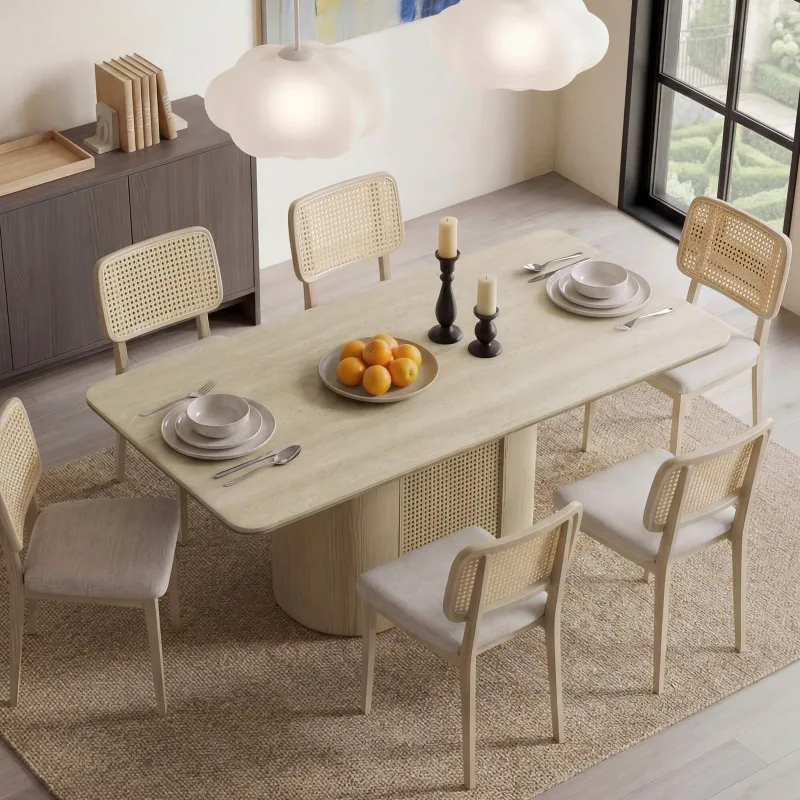
Travertine is a softer, warmer stone with natural pores that are filled and sealed during finishing. It looks relaxed and earthy, especially on a rattan or wooden base, and needs the same care as marble.
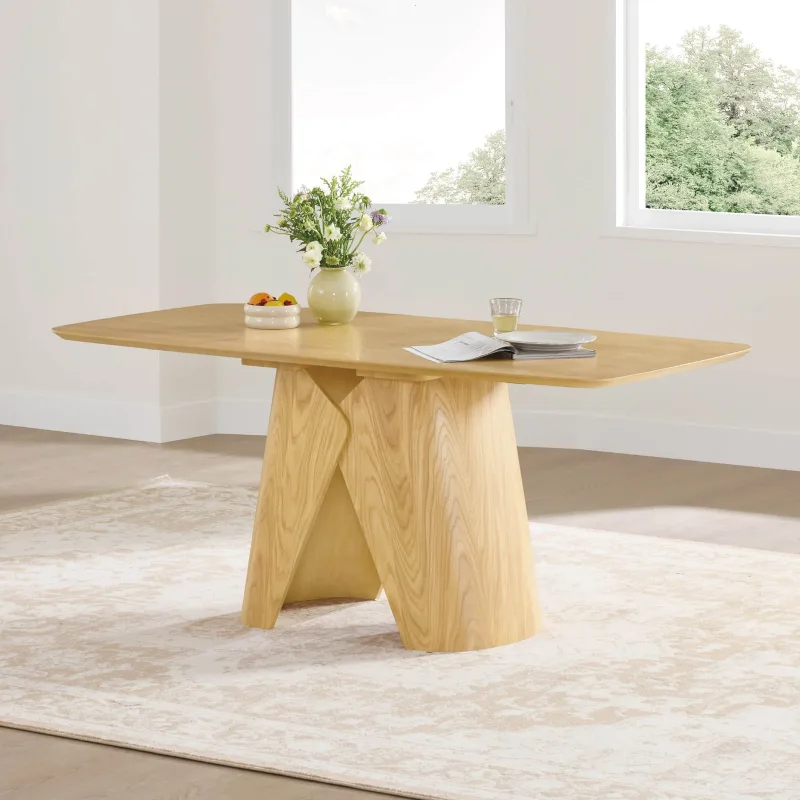
A wooden top feels warm and quiet, and fluted or sculpted wooden bases are part of the appeal. Wood shows heat rings and scratches more than stone, but light damage can be sanded and refinished. In humid cities, a well-sealed top and a table kept away from damp walls stay stable.
| Top | Best for | Watch out for |
|---|---|---|
| Sintered stone | Daily family meals, heavy use | Chipped edges from hard knocks |
| Marble | Formal dining, careful households | Acid etching, staining |
| Travertine | Relaxed, natural interiors | Needs resealing, softer surface |
| Wood | Warm, traditional or Scandinavian rooms | Heat rings, water marks |
Our full comparison of dining table materials covers glass and other options.
An extendable table is the answer for families who eat as four on weekdays and ten on Sundays. The top either slides apart to take a leaf stored underneath, or the leaves fold out from the ends. When choosing one, check:
In the monsoon, wooden runners can stiffen slightly. Open and close the table every few weeks so the mechanism stays smooth. For ideas on hosting, read preparing your home for festival guests.
Dining tables are usually 74 to 77 cm high, and chairs 45 to 47 cm at the seat, leaving 28 to 32 cm for legs and plates. If you choose chairs with arms, make sure the arms slide under the table edge, otherwise the chairs sit out from the table and take up more floor.
A bench along one side seats more people in less space and suits children well; our benches and banquettes include a storage banquette for wall-side seating. Upholstered chairs are more comfortable for long meals, and a performance fabric copes with spills. Browse dining chairs and read the dining chair buying guide, whether upholstered chairs are practical and how to mix and match chairs.
In most Mumbai flats the dining table shares space with the living room or sits beside the kitchen. A few layouts work well:
Our articles on small dining room ideas and open kitchen and living room layouts show more.
Hang a pendant light so its bottom sits about 75 to 85 cm above the table top, centred over the table rather than the room. A sideboard along the nearest wall holds crockery, serving dishes and table linen and gives a surface for laying out food; see our sideboards and storage. Leave at least 90 cm between the sideboard and the chair backs.
The top material and its size have the biggest effect: large stone slabs cost more to make and move than wood. Extending mechanisms add hardware and precision work. Sculptural, fluted or curved bases take more hand finishing than straight legs. A table sold as a set with chairs depends on the chair design and fabric too. Each product page shows a starting price, and we confirm any change in size or finish before production.
Many of our dining tables can be made in a different length or width, or with a different top. Send us your room measurements and a photo on WhatsApp, and we confirm the size on a drawing before production. Tables arrive with the base and top separate. Stone tops are crated and heavy, so share your lift cabin size and diagonal, and mention any steps before the lift lobby. We assemble the table in place.
Wipe stone tops with a soft cloth and mild soap; avoid bleach and acidic cleaners. Reseal marble and travertine once or twice a year. Use coasters and mats on wood, and keep wooden tables out of strong afternoon sun. Put felt pads under chair legs to protect the floor and the table base.
Share your room size and how many people eat together. We will suggest table sizes and matching chairs.
Thanks! We will be in touch shortly.