

Buying guides
What Is a Sectional Sofa and Is It Right for You?
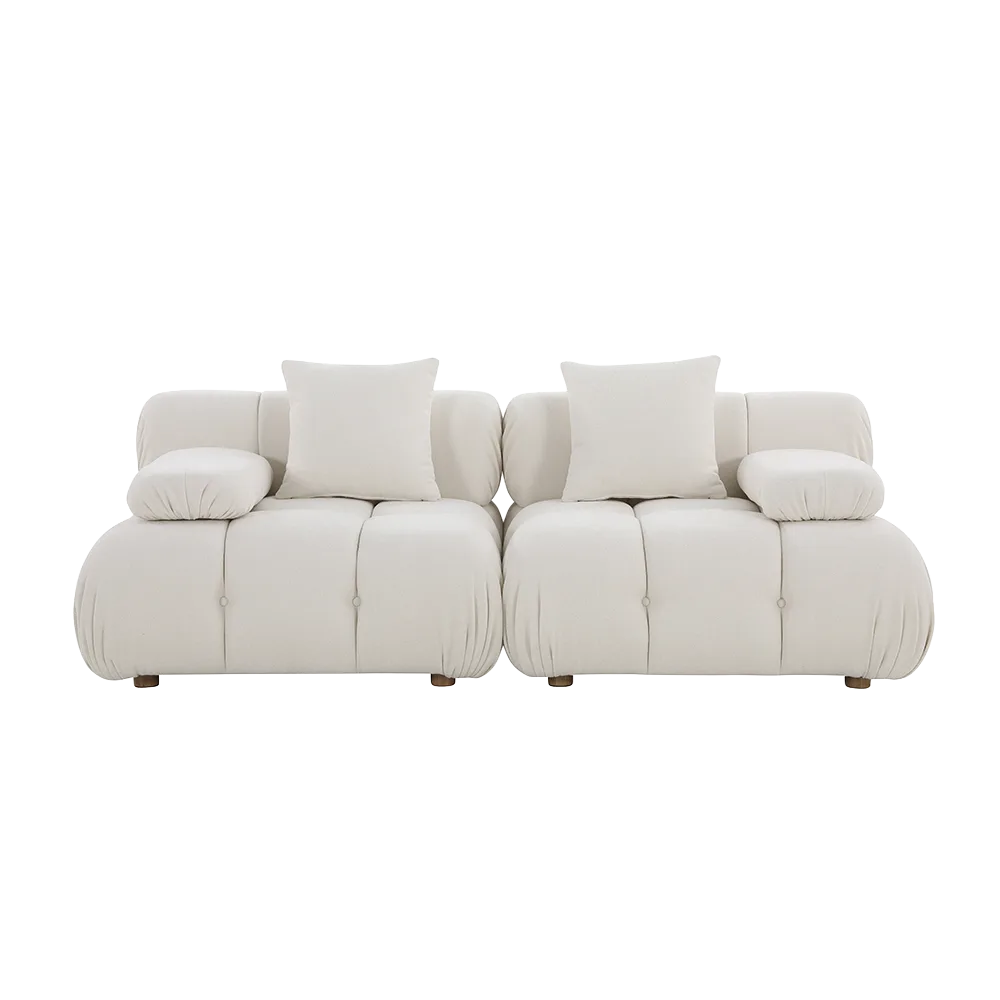
A sectional sofa is a sofa made of separate sections that sit together as one piece. Depending on the pieces you choose, it can form an L, a U, a long straight run or even a curve. It is the most flexible way to seat a big family, and the easiest large sofa to carry into a high-rise flat.
The pieces of a sectional
- Arm units: end pieces with one arm, labelled left or right.
- Armless units: middle seats that add length.
- Corner unit: the square seat that turns the sofa 90 degrees.
- Chaise: a long lounger, usually at one end.
- Ottoman: a loose footstool that can become an extra seat.
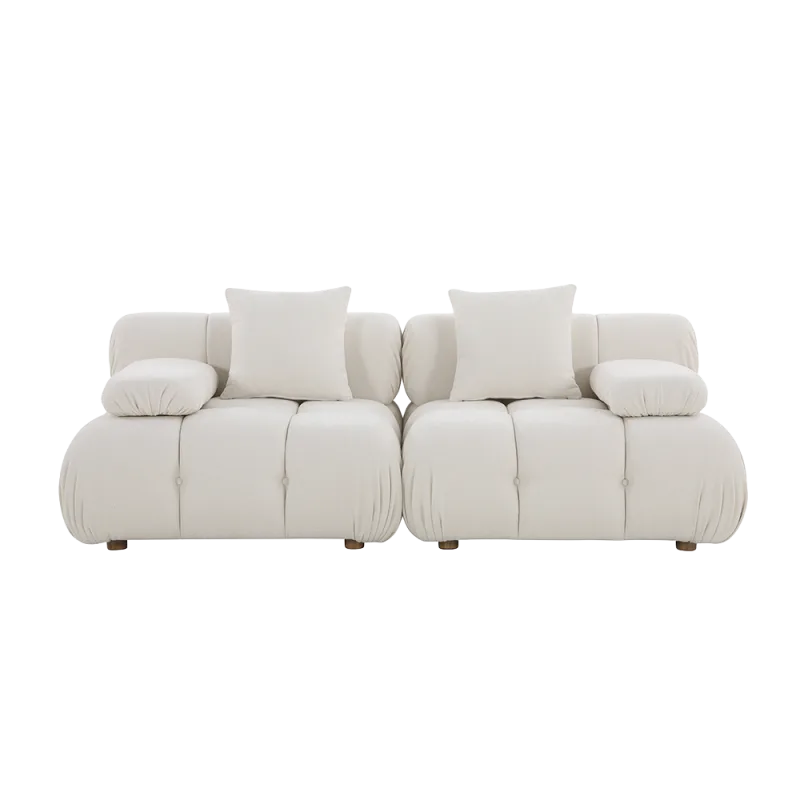
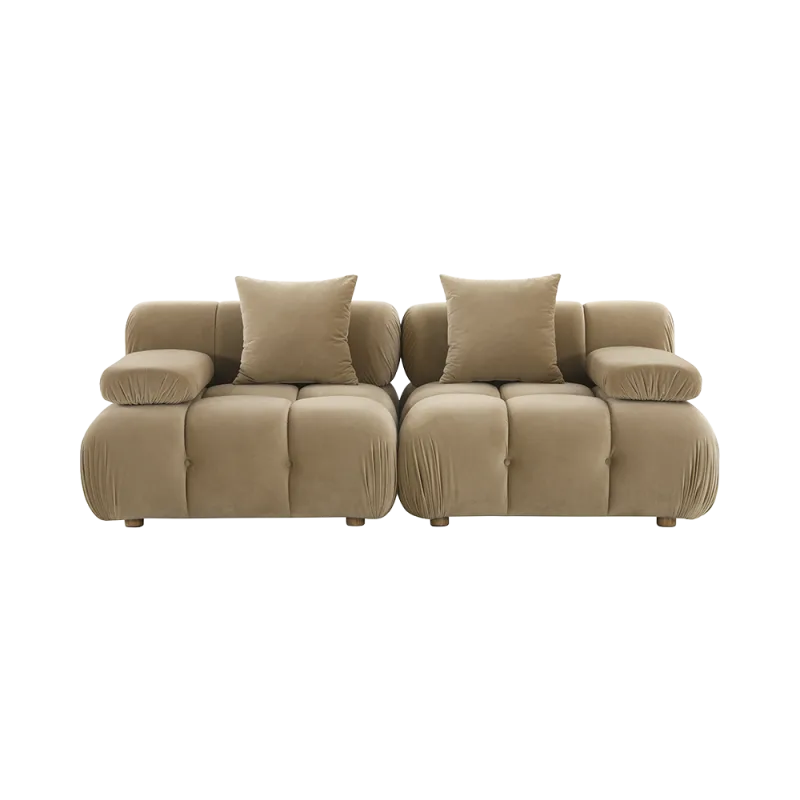
Some sectionals are fixed: the pieces only fit together one way. Others are fully modular, so you can rearrange them as your needs change.
Why people choose a sectional
- More seats in the same footprint. Using a corner seats one or two more people than a straight sofa.
- Easier delivery. Each piece is smaller than a full 3 seater, which matters in older buildings with narrow staircases.
- Future-proof. Add a piece when the family grows, or split the sofa between two rooms after a move.
- Zoning. In an open-plan home, the back of a sectional separates the living area from the dining area.
When a sectional is the wrong choice
- Your living room is smaller than about 11 × 11 ft. The corner will feel heavy.
- The room has doors or windows on both walls where the sectional would sit.
- You rearrange furniture often but cannot lift heavy pieces. Each module can still weigh 25 to 40 kg.
- You want a formal look. Sectionals read as relaxed and family-friendly.
Common shapes and room sizes
| Shape | Seats | Room it usually needs |
|---|---|---|
| L with chaise | 3–4 | 11 × 12 ft and up |
| L corner | 4–6 | 12 × 13 ft and up |
| U shape | 6–8 | 14 × 16 ft and up |
| Straight modular | 3–5 | A long wall, any room depth |
Always keep at least 75 cm (2.5 ft) for walkways and 40 to 45 cm between the seat and the coffee table.
What to check before buying
- Connectors. Pieces should lock together so they do not drift apart on smooth floors.
- Finished backs. If any section will float in the room, its back must be upholstered as neatly as the front.
- Seat depth. Deep seats suit lounging; shallower seats suit elders and guests. You cannot change depth per module, so choose for the whole family.
- Cushion covers. Removable, zipped covers make a large sofa far easier to clean.
- Delivery route. Measure the biggest piece against your door, lift and corridor turns.
Sectional or two sofas?
A 3 seater with a 2 seater at a right angle gives similar seating with more flexibility, but the corner gap means one less seat and a less unified look. If the room is square and you want the most seats, a sectional wins. If you might move to a home with a different layout, two sofas are easier to reuse. See our sectional sofas and L shape sofas to compare.
Made to measure
Standard modules come in fixed widths, which can leave an awkward gap against your wall. SofaNest builds sectionals to your exact wall lengths, so the sofa finishes where your room does.
Questions people ask
What is the difference between a sectional and an L shape sofa?
An L shape is one type of sectional. Sectional simply means the sofa is made of sections; they can form an L, a U, a straight line or a curve.
Do sectional pieces slide apart?
Good sectionals have connectors or brackets under the seat that lock the pieces together. Ask for them, especially on tiled or wooden floors.
How big a room do I need for a sectional?
As a rough guide, an L sectional suits rooms of at least 12 × 12 ft, and a U shape needs about 14 × 16 ft once you allow 75 cm walkways.